

What Is a CBD Blend? Wellness, Effects, and Choices
Over 60 percent of American adults are confused about the differences among CBD products, even though more people try hemp-derived wellness options each year. Understanding what sets CBD blends apart matters because misconceptions can lead to disappointment or safety concerns. This guide clears up the facts and explores how American consumers can make smarter choices, explain common myths, and highlight what actually goes into these unique combinations.
Table of Contents
- CBD Blends Defined And Common Misconceptions
- Types Of CBD Blends And Their Cannabinoids
- How CBD Blends Work In The Body
- Legal Status And Safety Considerations In The U.S.
- Comparing CBD Blends With Other Smoke Alternatives
Key Takeaways
| Point | Details |
|---|---|
| Understanding CBD Blends | CBD blends utilize the entourage effect, combining multiple cannabinoids for enhanced wellness benefits beyond single-compound products. |
| Types of CBD Blends | The three main types—full-spectrum, broad-spectrum, and isolate—offer different cannabinoid profiles and effects, catering to individual wellness goals. |
| Safety and Regulation | CBD products are federally legal under certain conditions, but consumers should be aware of varying state regulations and potential side effects. |
| Smoke Alternatives | CBD blends serve as a wellness-focused alternative to traditional smoking options, promoting a potentially less harmful experience through organic sourcing and targeted profiles. |
CBD Blends Defined and Common Misconceptions
CBD blends represent unique combinations of cannabinoids designed to provide targeted wellness benefits beyond traditional single-compound products. These specialized formulations combine multiple hemp-derived compounds to create synergistic effects that enhance overall potential therapeutic outcomes. Unlike isolated CBD, blends leverage the entourage effect, where different cannabinoids work together to amplify potential health benefits.
Common misconceptions about CBD blends often stem from limited understanding of their composition and effects. Consumer research highlights significant product mislabeling and potential contamination risks in unregulated markets. Many people incorrectly assume all CBD products deliver identical experiences, when in reality, blends can vary dramatically in their cannabinoid profiles and potential impacts. Some consumers mistakenly believe CBD is universally sedative, but different blends can produce varied effects ranging from calming to energizing.
Navigating CBD blends requires understanding key distinctions. Reputable producers like Full Moons Club craft blends using organic U.S. grown hemp, combining cannabinoids like CBD, CBG, and CBC to create targeted wellness experiences. Effective blends consider factors such as:
- Specific cannabinoid ratios
- Intended wellness goals
- Individual metabolic responses
- Extraction methods
- Purity and third-party testing
By understanding these nuanced approaches, consumers can make more informed choices about CBD blends that align with their personal wellness objectives.
Types of CBD Blends and Their Cannabinoids
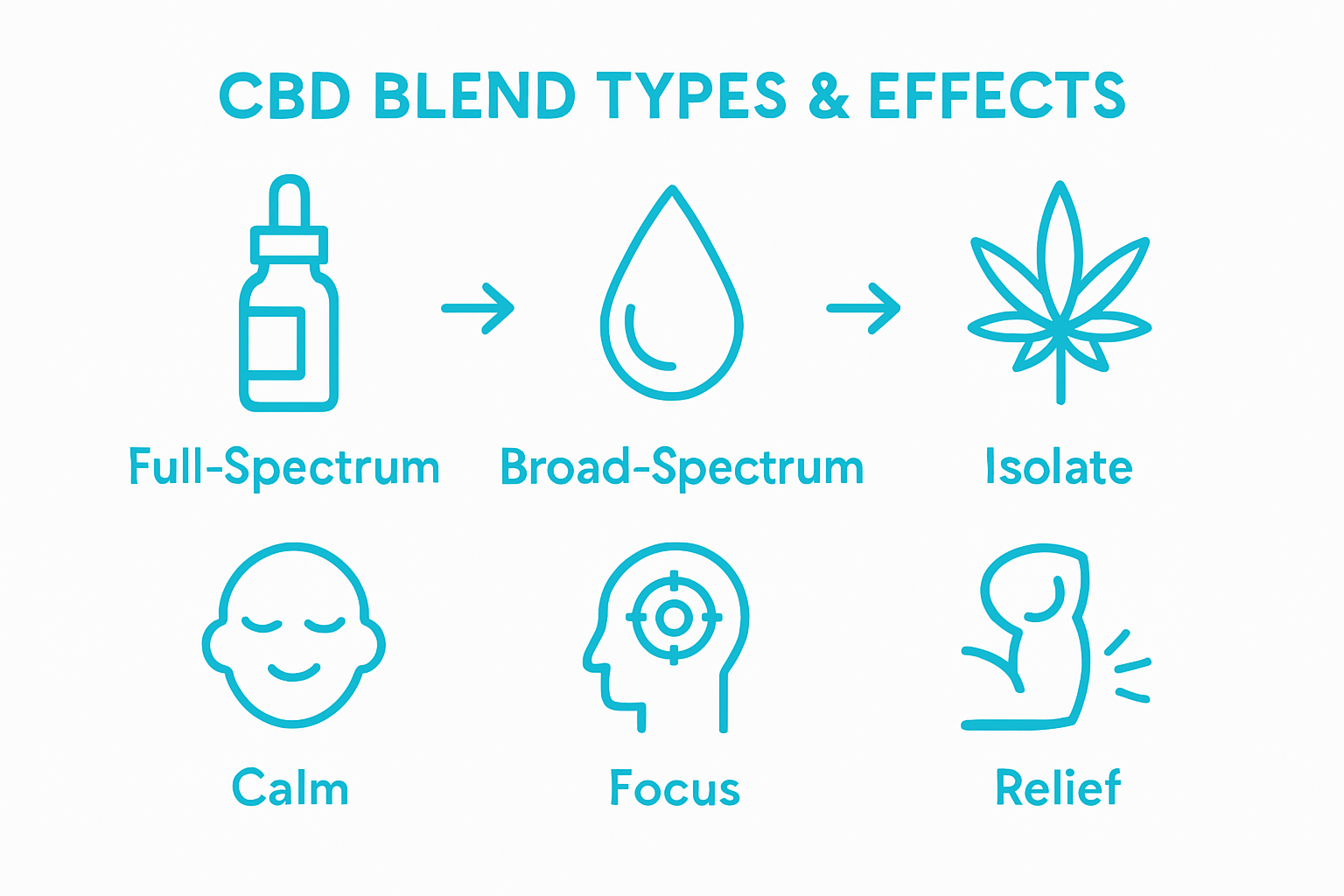
CBD blends are sophisticated combinations of cannabinoids that offer nuanced wellness experiences far beyond traditional single-compound products. Comprehensive research reveals three primary types of CBD configurations: full-spectrum, broad-spectrum, and isolate, each delivering unique potential benefits through distinct cannabinoid profiles.
Full-spectrum blends represent the most comprehensive approach, containing trace amounts of multiple cannabinoids including CBD, CBG, and CBC. These blends leverage the entourage effect, where different cannabinoids work synergistically to potentially enhance therapeutic outcomes. Broad-spectrum blends offer similar complexity but exclude THC, making them ideal for consumers seeking comprehensive cannabinoid interactions without psychoactive compounds. CBD isolate, in contrast, provides pure cannabidiol without additional hemp-derived compounds.
Understanding individual cannabinoids is crucial for selecting appropriate blends. Research highlights the unique properties of cannabinoids like CBD, CBN, and CBG, each contributing distinct potential wellness attributes:
- CBD (Cannabidiol): Potential stress reduction and relaxation
- CBG (Cannabigerol): Potential anti-inflammatory properties
- CBC (Cannabichromene): Potential mood support
- CBN (Cannabinol): Potential sleep assistance
Choosing the right CBD blend involves considering personal wellness goals, individual biochemistry, and desired effects. By understanding these nuanced cannabinoid interactions, consumers can make informed decisions about their hemp-derived wellness strategies.
How CBD Blends Work in the Body
Advanced cannabinoid research reveals intricate mechanisms of interaction between CBD blends and the human body, demonstrating a complex biochemical relationship that goes far beyond simple symptom management. The human endocannabinoid system plays a critical role in this interaction, serving as a sophisticated cellular communication network that regulates numerous physiological processes including mood, pain perception, immune response, and metabolic functions.

The endocannabinoid receptors (CB1 and CB2) act as primary communication points where cannabinoids engage with the body’s internal systems. Unlike traditional pharmaceuticals, CBD blends interact indirectly with these receptors, potentially modulating their activity without causing direct psychoactive effects. Scientific exploration of the entourage effect demonstrates how multiple cannabinoids work synergistically to enhance potential therapeutic outcomes, with each compound contributing unique biochemical interactions.
CBD blends interact with the body through several key mechanisms:
- Modulating neurotransmitter release
- Supporting inflammatory response regulation
- Potential stress and anxiety management
- Promoting homeostatic balance
- Interacting with pain perception pathways
Individual responses to CBD blends can vary significantly based on factors like metabolic rate, genetic predisposition, existing health conditions, and overall physiological composition. By understanding these nuanced interactions, consumers can make more informed choices about incorporating CBD blends into their wellness routines.
Legal Status and Safety Considerations in the U.S.
Federal regulatory frameworks surrounding CBD products continue to evolve, presenting a complex legal landscape for consumers and manufacturers. While hemp-derived CBD with less than 0.3% THC is federally legal, individual state regulations vary significantly, creating a nuanced regulatory environment that requires careful navigation by both producers and consumers.
Safety considerations are paramount when exploring CBD blends. Comprehensive medical research indicates that while CBD is generally well-tolerated, potential side effects and medication interactions exist. Consumers should be aware of potential adverse reactions, which may include:
- Fatigue and drowsiness
- Potential changes in appetite
- Possible interactions with prescription medications
- Mild gastrointestinal discomfort
- Potential liver enzyme fluctuations
Before incorporating CBD blends into their wellness routine, individuals should consult healthcare professionals, especially those with pre-existing medical conditions or currently taking prescription medications. Responsible consumption involves understanding personal health context, selecting high-quality products from reputable sources, and maintaining awareness of individual physiological responses to cannabinoid interactions.
Comparing CBD Blends With Other Smoke Alternatives
The landscape of smoke alternatives has dramatically transformed, with CBD blends emerging as a sophisticated wellness-focused option. Medical research comparing various smoking alternatives highlights the potential reduced harm of cannabinoid-based products, suggesting a nuanced approach to understanding smoke alternatives beyond traditional tobacco consumption.
Unlike conventional tobacco cigarettes, CBD blends offer a fundamentally different chemical composition and potential physiological interaction. Tobacco alternatives can be categorized across several key dimensions:
- Traditional Tobacco Cigarettes: High nicotine content, known carcinogenic compounds
- Nicotine Vapes: Chemical-intensive delivery system with potential respiratory risks
- Herbal Cigarettes: Plant-based alternatives with varying chemical profiles
- CBD Blends: Cannabinoid-rich, potentially wellness-oriented smoke alternative
CBD blends distinguish themselves through organic sourcing, targeted cannabinoid profiles, and a focus on potential wellness benefits. By eliminating nicotine, reducing harmful combustion byproducts, and leveraging natural hemp compounds, these alternatives represent a more intentional approach to smoking experience design. Consumers seeking mindful alternatives can explore CBD blends as a potentially less harmful option that aligns with holistic wellness objectives.
Discover Targeted Wellness with Premium CBD Blends from Full Moons Club
Understanding the unique effects of CBD blends means recognizing the importance of specific cannabinoid ratios and organic purity for your wellness goals. If you are seeking a natural way to relieve stress, promote relaxation, or create mindful rituals without the risks of tobacco or nicotine, choosing the right product can be overwhelming. Full Moons Club makes this easier by crafting high-quality hemp cigarettes rich in cannabinoids like CBD, CBG, and CBC, designed to deliver a smooth, chemical-free experience that aligns with your body’s needs.
Explore our carefully curated selection of CBD Cigarettes, Lighters & Totes for Sale at Full Moons Club and enjoy organic U.S.-grown hemp smokes rolled with sustainable FSC-certified paper and biodegradable filters. Experience a federally legal, 0% THC alternative that respects both your wellness and the environment. Start your journey toward a healthier, tobacco-free lifestyle today with Full Moons Club and elevate your smoking experience with intentional cannabinoid blends made for your well-being.
Frequently Asked Questions
What are CBD blends and how do they differ from single-compound products?
CBD blends are unique combinations of multiple cannabinoids designed to provide enhanced wellness benefits through the entourage effect, where different cannabinoids work together to amplify therapeutic outcomes. In contrast, single-compound products contain only one cannabinoid, like CBD alone.
What are the main types of CBD blends available?
The primary types of CBD blends include full-spectrum, broad-spectrum, and isolate. Full-spectrum blends contain multiple cannabinoids, including trace amounts of THC, while broad-spectrum blends exclude THC and isolates contain only pure CBD without any other cannabinoids.
How do CBD blends work in the body?
CBD blends interact with the body’s endocannabinoid system, modulating neurotransmitter release and influencing physiological processes such as mood, pain perception, and inflammation regulation, ultimately promoting homeostasis and wellness.
What should I consider when choosing a CBD blend?
When selecting a CBD blend, consider factors like your wellness goals, individual biochemistry, cannabinoid ratios, extraction methods, product purity, and third-party testing results to ensure you choose a blend that aligns with your personal health objectives.
