

What Is CBG and How It Elevates Hemp Wellness
More American adults are considering hemp products for wellness, yet few realize that CBG is often called the ‘mother cannabinoid’ due to its vital role in cannabis chemistry. While THC and CBD grab the headlines, CBG’s unique origin and non-psychoactive properties set it apart as a rare compound with promising potential. Understanding CBG reveals why it stands at the forefront of emerging cannabinoid science, offering new insights for anyone curious about plant-based health solutions.
Table of Contents
- Defining CBG: Origins And Essential Properties
- How CBG Differs From CBD And THC
- CBG Benefits For Wellness-Focused Lifestyles
- Legal Status Of CBG In The United States
- CBG Smokes As A Natural Alternative
Key Takeaways
| Point | Details |
|---|---|
| CBG as a Cannabinoid | Cannabigerol (CBG) is a non-psychoactive compound that serves as the precursor to other cannabinoids and offers potential therapeutic benefits through its direct engagement with CB1 and CB2 receptors. |
| Wellness Benefits | Research highlights CBG’s significant potential for anti-inflammatory support, neuroprotection, and metabolic health, appealing to those seeking natural wellness solutions. |
| Legal Considerations | CBG is federally legal in the U.S. when derived from hemp with less than 0.3% THC, but state regulations can vary, necessitating consumer vigilance. |
| CBG Smokes | CBG smokes provide a non-psychoactive, natural alternative to tobacco products, offering an intentional approach to herbal consumption with potential health benefits. |
Defining CBG: Origins and Essential Properties
Cannabigerol (CBG) represents a fascinating cannabinoid with profound potential in hemp wellness. Unlike its more famous cousins THC and CBD, CBG is often called the “mother cannabinoid” because it serves as the critical precursor from which other cannabinoids are synthesized. Understanding cannabis strains becomes more intriguing when exploring CBG’s unique biochemical role.
Originally discovered within the cannabis plant, CBG emerges through a remarkable biochemical process. Cannabigerolic acid (CBGA) undergoes non-enzymatic decarboxylation, transforming into the active CBG compound. This process occurs during the early stages of the cannabis plant’s growth, making CBG a rare and valuable cannabinoid that exists in relatively low concentrations compared to other cannabinoids.
The biological properties of CBG are particularly intriguing. Research indicates that CBG interacts with the body’s endocannabinoid system by engaging both CB1 and CB2 receptors, potentially offering a range of therapeutic benefits. Studies have suggested CBG demonstrates promising anti-inflammatory, neuroprotective, and antibacterial properties. Unlike THC, CBG is non-psychoactive, which means it does not produce the “high” associated with cannabis consumption, making it an attractive option for those seeking wellness benefits without altered mental states.
Key characteristics of CBG include:
- Non-psychoactive compound
- Precursor to other major cannabinoids
- Potential therapeutic interactions with the endocannabinoid system
- Naturally occurring in minimal quantities in mature cannabis plants
Understanding CBG requires recognizing its complex biochemical nature and its potential role in holistic wellness approaches. As research continues to evolve, CBG represents an exciting frontier in cannabinoid science, offering promising insights into natural health solutions.
How CBG Differs from CBD and THC
While CBD and THC dominate cannabis conversations, Cannabigerol (CBG) offers a unique biochemical profile that sets it apart. Understanding differences in hemp strains becomes crucial when exploring the nuanced world of cannabinoids. Unlike THC, which produces psychoactive effects, and CBD, which interacts indirectly with receptors, CBG demonstrates distinctive interaction mechanisms within the human body.

The most significant distinguishing factor lies in receptor engagement. Cannabinoid receptor interactions reveal that CBG acts directly on CB1 and CB2 receptors, creating a more targeted physiological response compared to CBD’s indirect modulation. This direct interaction suggests CBG might offer more precise therapeutic potential, potentially explaining its emerging reputation in wellness circles.
Chemically, these cannabinoids diverge in their molecular structure and biosynthetic pathways. THC is known for its psychoactive properties, while CBG and CBD remain non-intoxicating. CBG is often considered the “stem cell” of cannabinoids, serving as the chemical precursor from which other cannabinoids are synthesized. This unique position makes CBG particularly intriguing for researchers investigating potential wellness applications.
Key comparative characteristics include:
- Receptor Interaction:
- CBG: Direct CB1/CB2 receptor engagement
- CBD: Indirect receptor modulation
- THC: Strong psychoactive receptor binding
- Psychoactive Properties:
- CBG: Non-psychoactive
- CBD: Non-psychoactive
- THC: Psychoactive
- Therapeutic Potential:
- CBG: Emerging research suggests targeted wellness benefits
- CBD: Well-established wellness applications
- THC: Mixed therapeutic and recreational uses
Understanding these nuanced differences helps consumers make informed decisions about cannabinoid wellness strategies, recognizing that each compound offers unique potential for supporting overall health and balance.
CBG Benefits for Wellness-Focused Lifestyles
Holistic wellness enthusiasts are increasingly turning their attention to Cannabigerol (CBG) as a powerful natural compound with comprehensive health potential. Cannabis lifestyle benefits reveal CBG’s remarkable capacity to support overall well-being through its multifaceted therapeutic properties. Unlike traditional wellness supplements, CBG offers a nuanced approach to supporting physical and mental balance.
Research demonstrates that CBG exhibits an impressive range of pharmacological effects that can significantly enhance wellness strategies. The compound has been associated with potential benefits including neuroprotection, anti-inflammatory responses, and metabolic support. Specifically, CBG’s ability to modulate inflammatory processes and provide antibacterial protection positions it as a compelling option for individuals seeking natural approaches to maintaining optimal health.
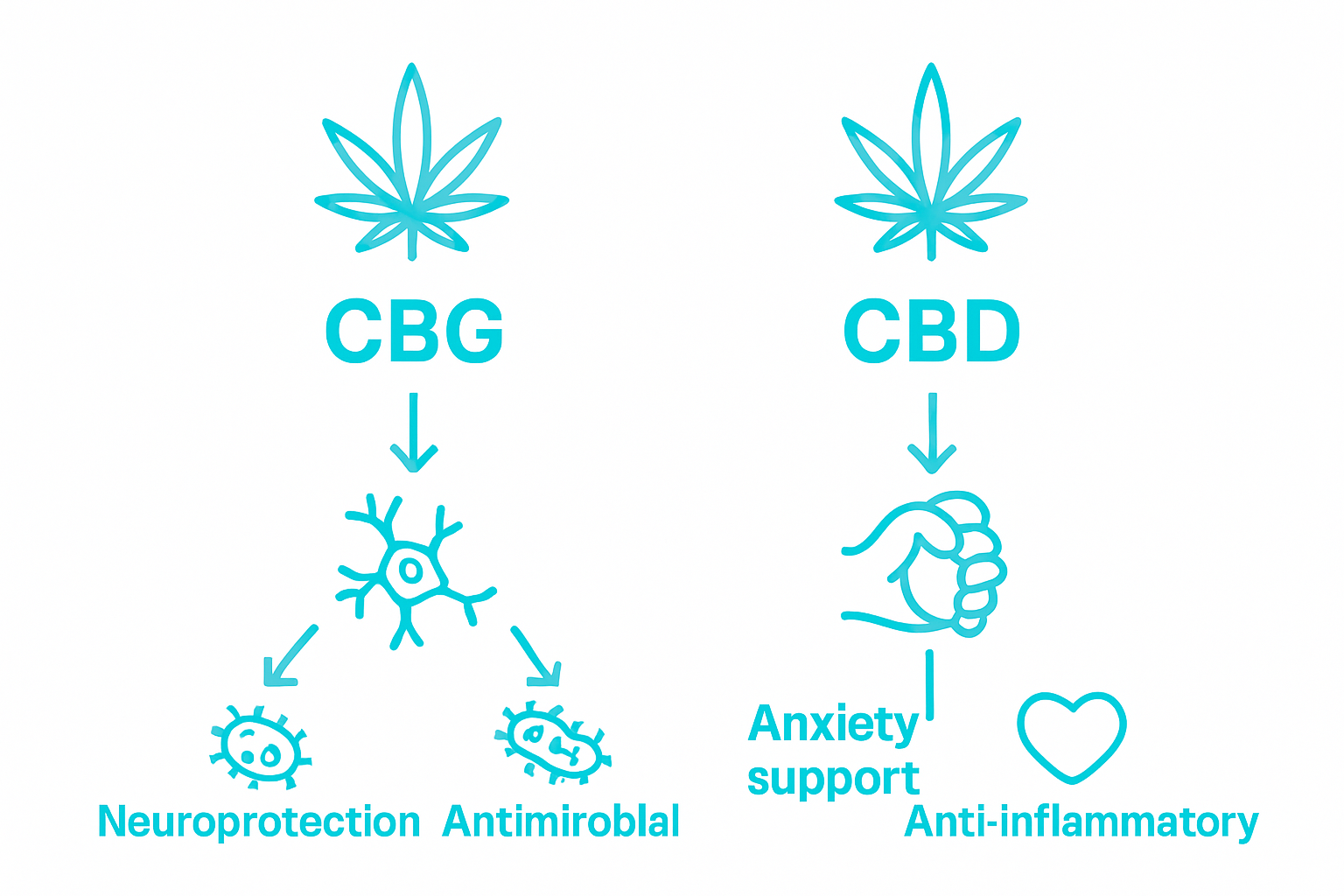
The neuromodulatory potential of CBG represents a particularly exciting frontier in wellness science. Its interaction with the body’s endocannabinoid system suggests potential applications in stress management, cognitive function, and emotional equilibrium. By supporting the body’s natural regulatory mechanisms, CBG may help individuals develop more resilient and balanced lifestyle approaches, addressing wellness from a holistic perspective.
Potential wellness benefits of CBG include:
- Comprehensive anti-inflammatory support
- Natural stress response modulation
- Potential neuroprotective mechanisms
- Antibacterial and antifungal properties
- Support for metabolic health
- Potential pain management strategies
For wellness-focused individuals, CBG represents more than just another supplement. It embodies a sophisticated, scientifically-grounded approach to supporting the body’s intrinsic healing and balancing mechanisms, offering a promising pathway to enhanced personal well-being.
Legal Status of CBG in the United States
The legal landscape surrounding Cannabigerol (CBG) has evolved significantly in recent years, creating a complex regulatory environment for consumers and manufacturers. Legal CBD standards provide crucial context for understanding cannabinoid regulations, with CBG following similar federal guidelines. The 2018 Farm Bill marked a pivotal moment in cannabinoid legislation, fundamentally transforming the legal status of hemp-derived compounds.
Federal legislation has established a clear framework for CBG’s legal standing, specifically when derived from industrial hemp containing less than 0.3% THC. This critical distinction allows for the legal production, distribution, and consumption of CBG products at the national level. However, consumers must remain vigilant, as state-level regulations can vary significantly, creating a patchwork of legal interpretations across different jurisdictions.
Navigating the legal nuances of CBG requires a comprehensive understanding of both federal and state regulations. While the compound is federally legal, individual states maintain the right to implement more restrictive policies. Consumers should always verify local regulations and purchase CBG products from reputable sources that provide third-party lab testing and transparent sourcing information.
Key legal considerations for CBG include:
- Federally legal when derived from hemp
- Must contain less than 0.3% THC
- Subject to state-level regulatory variations
- Requires compliance with agricultural and manufacturing standards
- Ongoing research continues to inform regulatory frameworks
The evolving legal landscape of CBG underscores the importance of staying informed and approaching cannabinoid consumption with a nuanced, research-driven perspective. As scientific understanding deepens, legal frameworks will likely continue to adapt, reflecting the complex nature of these emerging wellness compounds.
CBG Smokes as a Natural Alternative
Hemp smoking enthusiasts are discovering CBG as a revolutionary natural alternative that offers wellness benefits without traditional tobacco risks. Organic CBD smokes represent an emerging trend that provides a mindful approach to herbal consumption, with CBG leading the way in innovative wellness strategies.
The pharmacological profile of CBG makes it an exceptional choice for individuals seeking natural alternatives to traditional smoking experiences. Its non-psychoactive nature combined with potential anti-inflammatory and antibacterial properties positions CBG smokes as a sophisticated wellness tool. Unlike conventional tobacco products, CBG smokes offer a cleaner, more intentional approach to herbal consumption that aligns with holistic health principles.
Researchers continue to explore CBG’s potential, recognizing its unique interactions with the human body’s receptors. The compound’s ability to provide potential therapeutic benefits without inducing intoxication makes it particularly appealing for wellness-focused consumers. These smokes represent more than just an alternative smoking experience they embody a conscious approach to personal health and mindful consumption.
Key advantages of CBG smokes include:
- Non-psychoactive botanical experience
- Potential anti-inflammatory benefits
- Natural alternative to tobacco products
- Zero nicotine content
- Potential stress-reduction properties
- Environmentally conscious consumption
For individuals seeking a thoughtful, health-conscious approach to herbal smoking, CBG offers a compelling pathway to wellness that transcends traditional consumption methods. Its emergence represents a sophisticated evolution in natural health alternatives.
Discover the Power of CBG with Full Moons Club Wellness Smokes
The article highlights the unique benefits of CBG as a natural, non-psychoactive cannabinoid that directly engages cannabinoid receptors to support inflammation, stress management, and overall balance. If you are seeking a healthier alternative to traditional smoking that leverages these wellness properties, you understand the challenge of finding products that combine quality, purity, and sustainability. Full Moons Club offers a premium selection of hemp smokes crafted from organic U.S.-grown hemp rich in CBG and other cannabinoids proven to elevate your wellness routine.

Experience the difference with our chemical-free, tobacco-free, and nicotine-free herbal cigarettes rolled in eco-friendly materials for a mindful yet enjoyable smoking ritual. Visit Full Moons Club today to explore our range of CBG smokes that align with your holistic wellness goals. Take control of your stress relief and wellness lifestyle now with products designed for purification, relaxation, and clarity. Your path to a natural hemp-smoke alternative starts here.
Frequently Asked Questions
What is CBG and how does it differ from CBD and THC?
CBG, or Cannabigerol, is a non-psychoactive cannabinoid and precursor to other major cannabinoids like THC and CBD. Unlike THC, CBG does not produce psychoactive effects, and while it interacts directly with CB1 and CB2 receptors, CBD modulates them indirectly.
What are the potential health benefits of CBG?
CBG offers a range of potential therapeutic benefits, including anti-inflammatory support, neuroprotection, antibacterial properties, and metabolic support. It may also help in stress management and promote cognitive function.
How does CBG interact with the endocannabinoid system?
CBG interacts with the endocannabinoid system by engaging both CB1 and CB2 receptors, potentially leading to targeted physiological responses that can enhance overall wellness and balance in the body.
Is CBG legal to use, and what regulations surround it?
CBG is federally legal when derived from hemp containing less than 0.3% THC, but state regulations may vary. It’s important to check local laws and purchase from reputable sources that provide third-party lab testing.
