

Sleepless nights can leave even the most health-focused American adults searching for natural relief. As interest grows in eco-friendly wellness options, many are discovering the potential of premium CBD products for supporting better sleep. With CBD acting through the endocannabinoid system to help relax both mind and body, this article shows how these sustainable solutions may offer a gentle path toward restful nights while navigating legal and safety considerations unique to the United States.
Table of Contents
- What Is CBD and How It Affects Sleep
- Common Types and Effects of CBD Products
- Understanding Legal Status and Safety in the U.S.
- Comparing CBD to Traditional Sleep Aids
- Risks, Side Effects, and Quality Concerns
Key Takeaways
| Point | Details |
|---|---|
| Potential Benefits of CBD | CBD may promote sleep by reducing anxiety, decreasing pain, and supporting relaxation without psychoactive effects. |
| Product Variability | Users should be aware of different CBD product types and their absorption rates for effective use. |
| Legal and Safety Considerations | The legal status of CBD varies by state; consumers should verify local laws and consult healthcare professionals. |
| Potential Side Effects | CBD may cause mild side effects, and consumers should prioritize third-party lab-tested products for safety. |
What Is CBD and How It Affects Sleep
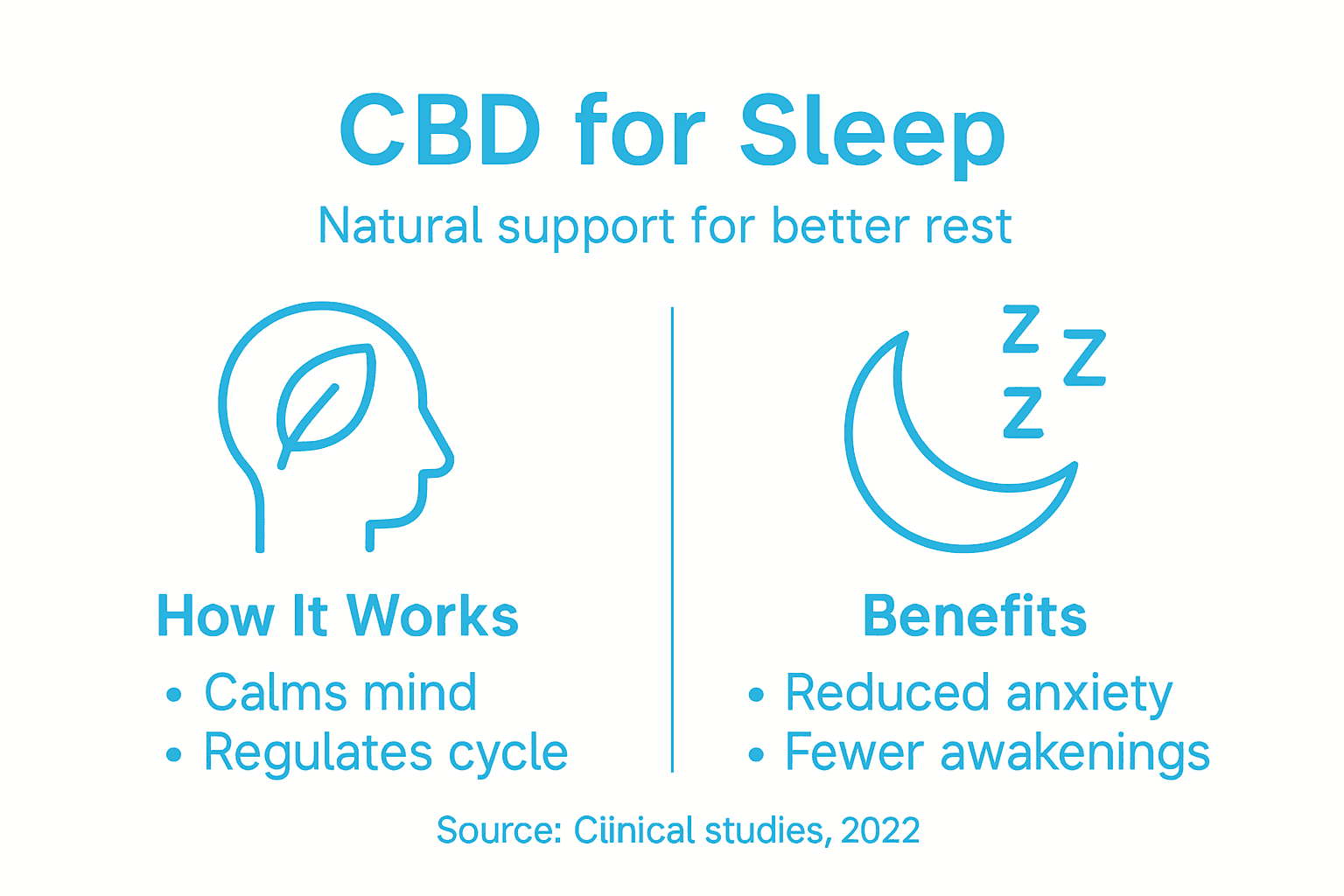
Cannabidiol (CBD) is a naturally occurring compound found in cannabis plants that has gained significant attention for its potential therapeutic benefits, especially regarding sleep. Unlike THC, CBD does not produce psychoactive effects, making it an intriguing option for those seeking natural sleep solutions.
CBD interacts with the body’s complex endocannabinoid system, which plays a critical role in regulating various physiological processes, including sleep-wake cycles. Research suggests potential sleep-promoting properties through multiple mechanisms:
- Reducing anxiety and stress that can disrupt sleep patterns
- Potentially decreasing pain and physical discomfort
- Modulating neurotransmitter activity in the brain
- Supporting overall relaxation and nervous system balance
CBD does not produce a high and is primarily derived from hemp plants, offering a potentially gentler alternative to traditional sleep medications.
Scientists believe CBD might influence sleep by interacting with several molecular targets in the nervous system. Current research indicates potential anxiolytic and sleep-promoting effects, though comprehensive long-term studies are still ongoing to fully understand its mechanisms.
Pro tip: Start with low CBD doses and consult a healthcare professional to determine the most appropriate approach for your individual sleep needs.
Common Types and Effects of CBD Products
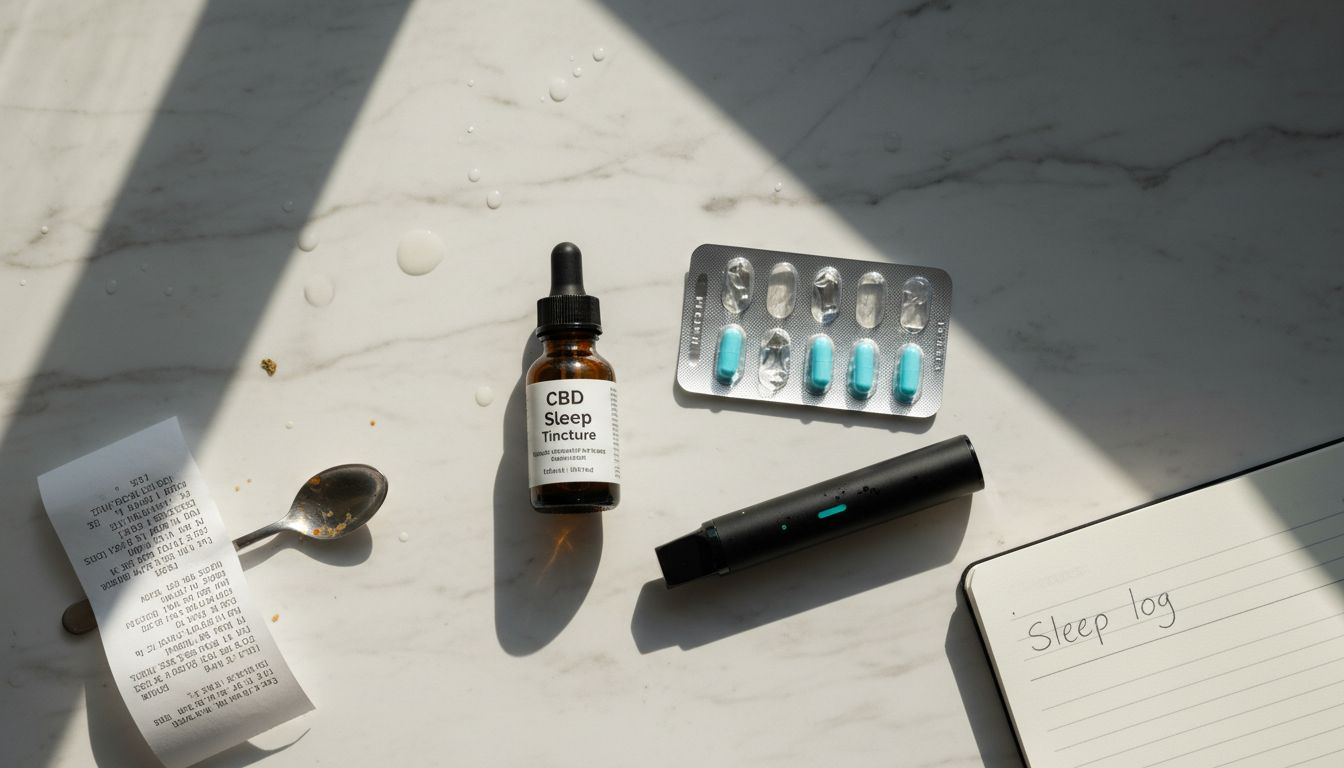
CBD has emerged as a versatile wellness compound available in numerous product formats designed to suit different preferences and health needs. CBD is marketed across various consumer products, ranging from oils and capsules to topical lotions and edible options.
The primary types of CBD products include:
- CBD Oils: Liquid extracts taken sublingually or added to beverages
- CBD Capsules: Convenient, pre-measured doses for easy consumption
- CBD Topicals: Creams and lotions applied directly to the skin
- CBD Edibles: Gummies, chocolates, and other consumable formats
- CBD Vapes: Inhalable products for rapid absorption
- CBD Tinctures: Concentrated liquid extracts with dropper administration
Each CBD product type offers unique absorption rates and potential benefits, allowing users to choose methods that best suit their wellness goals.
When considering CBD products, it’s crucial to understand their potential effects and variations. Different formulations may produce slightly different experiences, with some focusing on relaxation, others on pain management, and some targeting specific sleep challenges.
Potency and Formulation play significant roles in determining a product’s effectiveness. Factors like extraction method, hemp source, and additional ingredients can dramatically influence the overall impact.
Pro tip: Always verify third-party lab testing results and start with lower dosages to understand your individual response to CBD products.
Here’s a comparison of major CBD product types and their typical use cases:
| Product Type | Common Purpose | Typical Onset Time |
|---|---|---|
| CBD Oil | General relaxation | 15–45 minutes |
| CBD Capsule | Convenient dosing | 30–90 minutes |
| CBD Topical | Targeted pain relief | 15–30 minutes |
| CBD Edible | Long-lasting effects | 30–120 minutes |
Understanding Legal Status and Safety in the U.S.
CBD’s legal landscape in the United States is complex and continually evolving. Federal regulations define specific guidelines for CBD products, creating a nuanced framework that varies significantly between states and product types.
Key legal considerations for CBD include:
- Federal Legality: Hemp-derived CBD with less than 0.3% THC is federally legal
- State Variations: Individual states may have stricter regulations
- Source Matters: Hemp-derived and marijuana-derived CBD have different legal standings
- FDA Oversight: Not all CBD products are FDA-approved
- Ongoing Regulatory Changes: Laws continue to develop rapidly
The 2018 Farm Bill was a pivotal moment, federally legalizing hemp-derived CBD and creating a new regulatory environment.
Consumers must navigate a complex legal landscape where federal and state laws can differ dramatically. Marijuana-derived CBD remains more legally restricted, with availability depending on specific state medical and recreational marijuana laws.
Safety Considerations are equally important. While CBD is generally considered safe, potential side effects and interactions with other medications exist. Quality and purity can vary widely, making third-party lab testing crucial for responsible consumption.
Pro tip: Always research current local laws and consult healthcare professionals before incorporating CBD into your wellness routine.
Comparing CBD to Traditional Sleep Aids
Traditional sleep aids and CBD represent two distinct approaches to addressing sleep challenges, each with unique mechanisms and potential benefits. While prescription medications and over-the-counter supplements have long been standard solutions, CBD offers an emerging alternative for those seeking natural sleep support.
Key differences between CBD and traditional sleep aids include:
-
Mechanism of Action:
- CBD: Reduces anxiety, modulates neurological processes
- Melatonin: Directly signals sleep cycle regulation
- Prescription Medications: Induce sedation through neurochemical suppression
-
Side Effect Profile:
- CBD: Generally mild, minimal risk of dependency
- Melatonin: Limited short-term side effects
- Prescription Sleep Medications: Potential for significant side effects and addiction
CBD offers a nuanced approach to sleep support, addressing underlying factors like anxiety and pain rather than simply forcing unconsciousness.
Comparative research suggests CBD may interact differently with the body’s sleep mechanisms, potentially providing a more holistic approach to sleep challenges. Unlike traditional pharmaceuticals that often mask symptoms, CBD works to address potential root causes of sleep disruption.
Regulatory Considerations further differentiate these options. While melatonin is FDA-regulated as a supplement and prescription medications undergo rigorous testing, CBD exists in a more complex regulatory landscape with ongoing research and evolving guidelines.
Pro tip: Consult healthcare professionals to develop a personalized sleep strategy that may integrate CBD with other wellness approaches.
The table below summarizes the main differences between CBD, melatonin, and prescription sleep aids:
| Feature | CBD | Melatonin | Prescription Sleep Aids |
|---|---|---|---|
| Mechanism | Modulates endocannabinoids | Regulates circadian rhythm | Induces sedation chemically |
| Dependency Risk | Low | Low | Moderate to high |
| Regulation | Evolving, less stringent | FDA as supplement | Strict FDA approval |
Risks, Side Effects, and Quality Concerns
CBD product safety requires careful consumer awareness, as the current marketplace presents significant variability in product quality and potential health impacts. Understanding the potential risks and side effects is crucial for responsible usage.
Potential side effects of CBD include:
-
Physical Reactions:
- Drowsiness
- Liver enzyme changes
- Gastrointestinal disruption
- Potential appetite modifications
-
Psychological Effects:
- Mood alterations
- Potential irritability
- Mild anxiety changes
Not all CBD products are created equal, and consumers must approach their selection with informed caution.
Commercially available CBD products frequently demonstrate inconsistent labeling and quality control, with some studies revealing significant discrepancies between claimed and actual CBD concentrations. These variations can potentially expose users to unexpected risks or ineffective dosages.
Medication Interactions represent another critical consideration. CBD can modify how the body processes certain pharmaceuticals, potentially creating unexpected side effects or reducing medication effectiveness. Individuals taking prescription medications should consult healthcare professionals before incorporating CBD into their wellness routine.
Pro tip: Always request third-party lab testing results and start with minimal doses to understand your individual physiological response.
Discover Natural Relief for Sleep Challenges with Full Moons Club
If the struggle to find a restful night weighs on you due to anxiety, stress, or discomfort, exploring CBD as a natural sleep aid is a promising step. The article highlights how CBD interacts with your endocannabinoid system to support relaxation and reduce sleep disruptions without the harsh effects of traditional medications. For those seeking a gentler, wellness-focused alternative to improve sleep quality, Full Moons Club offers an ideal solution.

Experience the calm of hemp-derived products with our premium collection of CBD smokes and hemp cigarettes, crafted from organic U.S.-grown hemp rich in cannabinoids like CBD, CBG, and CBC. Enjoy a tobacco-free, nicotine-free, chemical-free way to unwind and ease into restful nights. Each herbal cigarette is rolled in eco-friendly paper and contains 0% THC so you can relax with peace of mind. Start your healthier sleep ritual today with fast shipping and elevate your wellness journey at Full Moons Club. Explore our offerings now and take a natural step toward better sleep.
Frequently Asked Questions
What is CBD and how does it affect sleep?
CBD, or cannabidiol, is a naturally occurring compound in cannabis that may promote sleep by reducing anxiety, managing pain, and supporting overall relaxation without psychoactive effects.
How should I start using CBD for sleep?
It’s recommended to start with low doses of CBD and consult a healthcare professional to determine the most suitable approach for your individual sleep needs.
What are the different types of CBD products available for sleep?
Common CBD product types include oils, capsules, topicals, edibles, vapes, and tinctures, each offering unique absorption rates and potential benefits for sleep support.
How does CBD compare to traditional sleep aids like melatonin?
CBD works by modulating anxiety and neurological processes, while melatonin directly regulates sleep cycles. CBD generally has a lower risk of dependency and minimal side effects compared to prescription sleep medications.