

Most Americans have heard of CBD, yet confusion about its effects and safety is still widespread. As CBD gains popularity across the United States, more people are turning to this natural option for stress and wellness support, but misconceptions continue to circulate. With more than 60% of American adults reporting interest in CBD products, understanding the basics and uncovering the truth behind common myths can help you make smarter choices for your own well-being.
Table of Contents
- CBD Explained: Basics and Common Myths
- Endocannabinoid System: CBD’s Role in the Body
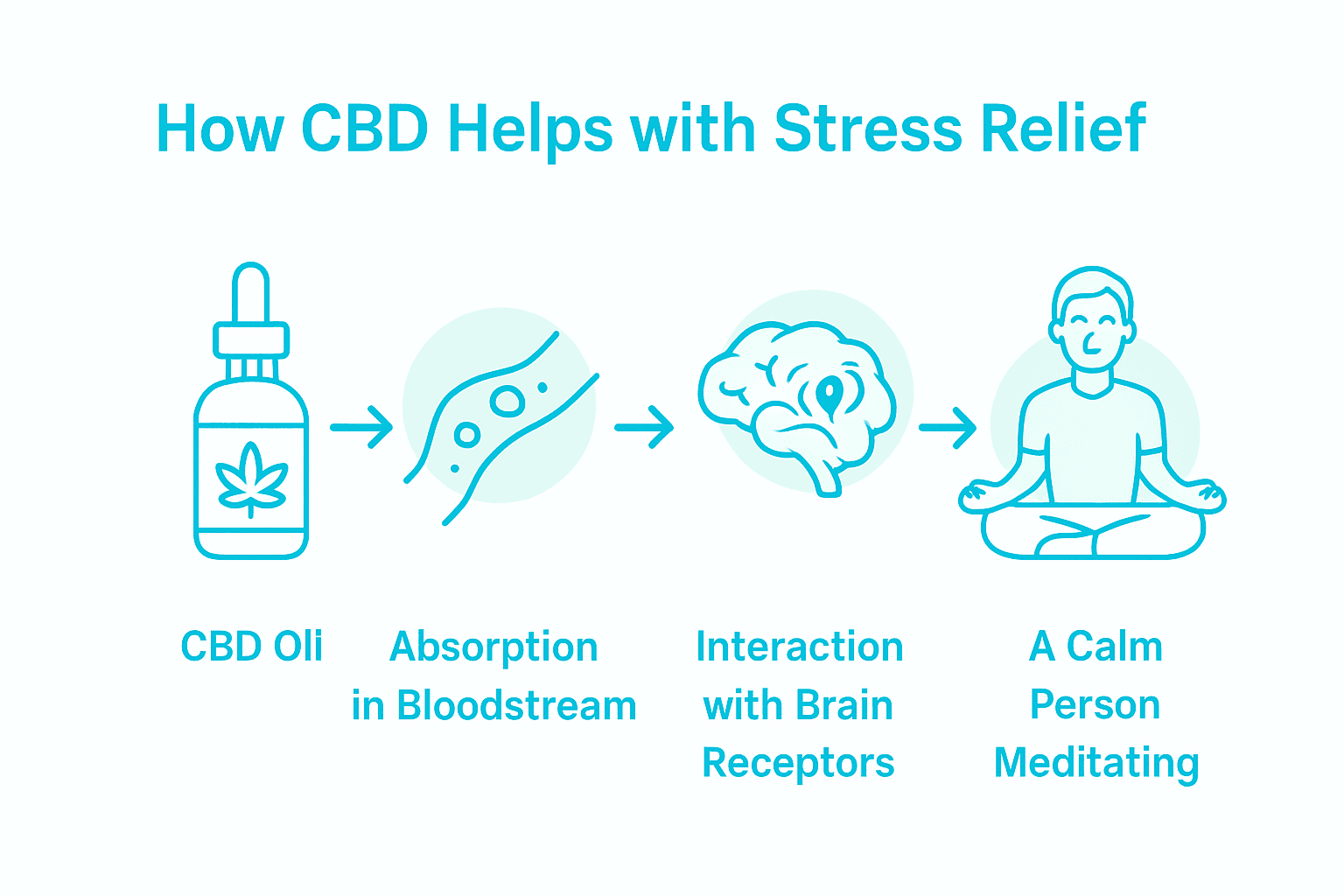
- How CBD Works: Absorption and Interaction
- Benefits of CBD for Stress and Wellness
- Legal Status and Safety in the United States
Key Takeaways
| Point | Details |
|---|---|
| Understanding CBD | CBD is non-intoxicating and interacts differently with the body compared to THC, making it a suitable option for wellness support without a “high.” |
| Consult Healthcare Professionals | It is important to consult with a healthcare provider before trying CBD, especially when taking other medications. |
| Personalized Approach | Individual responses to CBD can vary significantly, so starting with low doses and monitoring reactions is essential for optimal wellness outcomes. |
| Regulatory Landscape | While CBD derived from hemp is federally legal in the U.S., state regulations may vary, necessitating careful navigation and sourcing from reputable suppliers. |
CBD Explained: Basics and Common Myths
Cannabidiol, commonly known as CBD, is a natural compound derived from hemp plants that has gained significant attention for its potential wellness benefits. Unlike its cousin THC, CBD is non-intoxicating and does not produce the “high” associated with cannabis use. Research from the National University of Health Sciences confirms that CBD is extracted from hemp plants containing less than 0.3% THC, making it a legal and accessible option for many individuals seeking natural wellness alternatives.
One of the most persistent myths about CBD is that it functions identically to marijuana, causing psychoactive effects. In reality, CBD interacts with the body’s endocannabinoid system differently, potentially supporting relaxation and balance without altering mental state. Experts recommend consulting healthcare professionals before incorporating CBD into your routine, as it can interact with certain medications by affecting enzyme activity.
Understanding CBD requires recognizing its complexity. The compound contains numerous cannabinoids that may offer various potential benefits, including:
- Supporting stress management
- Promoting relaxation
- Potentially helping with sleep quality
- Offering natural wellness support
Pro Tip for CBD Beginners: Start with low dosages and gradually increase while monitoring your body’s response, ensuring you purchase from reputable sources with transparent third-party lab testing for quality and purity.
To summarize, here are the key distinctions between CBD and THC:
| Compound | Psychoactive Effect | Legal Federal Status (US) | Typical Use Cases |
|---|---|---|---|
| CBD | No “high” effect | Legal if <0.3% THC | Anxiety, stress, wellness |
| THC | Intoxicating “high” | Federally restricted | Recreation, chronic pain |
Endocannabinoid System: CBD’s Role in the Body
Endocannabinoid System (ECS) represents a fascinating biological network that plays a critical role in maintaining physiological balance throughout the human body. Harvard Health explains this complex system as a sophisticated communication network regulating essential functions like mood, appetite, pain sensation, and immune response. Unlike traditional neurotransmitter systems, the ECS operates through cannabinoid receptors spread across multiple physiological systems, creating a nuanced approach to bodily homeostasis.

The interaction between CBD and the ECS is particularly intriguing. Scientific research demonstrates that CBD does not directly bind to cannabinoid receptors like THC, but instead modulates their activity and influences overall system functioning. This unique mechanism allows CBD to potentially support wellness without producing psychoactive effects. The ECS contains two primary receptor types - CB1 (predominantly in the brain and central nervous system) and CB2 (primarily in peripheral organs and immune cells) - which CBD can indirectly interact with and potentially help regulate.
Key mechanisms of CBD’s interaction with the ECS include:
- Potentially reducing inflammatory responses
- Supporting stress adaptation
- Helping normalize sleep cycles
- Potentially balancing neurotransmitter production
- Promoting overall physiological equilibrium
Pro Tip for ECS Understanding: Listen to your body’s signals and consider tracking your responses when exploring CBD, as individual endocannabinoid systems can vary significantly in their sensitivity and reactivity.
How CBD Works: Absorption and Interaction
Pharmacokinetics play a crucial role in understanding how CBD moves through the human body. Scientific research on CBD absorption reveals that bioavailability can dramatically vary depending on the method of consumption. Oral ingestion, for instance, typically results in lower absorption rates compared to inhalation methods, with factors like metabolism, body composition, and individual biochemistry significantly influencing how efficiently CBD enters the bloodstream.
Unlike traditional compounds, CBD interacts with the body in a unique manner. Research demonstrates that CBD does not directly bind to cannabinoid receptors but instead modulates their activity through indirect mechanisms. This nuanced interaction allows CBD to potentially influence multiple receptor systems, creating a complex and wide-ranging impact on physiological processes without producing psychoactive effects.
Key aspects of CBD absorption and interaction include:
- Variability in metabolic processing
- Potential interactions with enzyme systems
- Indirect modulation of receptor activity
- Differences in absorption based on consumption method
- Individual variations in biochemical response
Pro Tip for CBD Absorption: Choose your consumption method strategically, considering factors like personal metabolism, desired onset time, and bioavailability to maximize potential wellness benefits.
Here’s a comparison of common CBD consumption methods and their characteristics:
| Consumption Method | Absorption Speed | Typical Bioavailability | Duration of Effects |
|---|---|---|---|
| Oral (edibles/oil) | Slow (30-90 min) | Low (13-19%) | 4-6 hours |
| Sublingual (tincture) | Moderate (15-45 min) | Medium (20-35%) | 2-4 hours |
| Inhalation (vaping/smoking) | Rapid (minutes) | High (30-56%) | 1-3 hours |
| Topical (creams/lotions) | Variable (localized) | Low (varies) | 2-4 hours |
Benefits of CBD for Stress and Wellness
Stress management represents a critical aspect of modern wellness, and emerging research suggests CBD might offer promising natural support. Scientific investigations into the endocannabinoid system indicate that CBD could potentially help modulate stress responses by interacting with neurological pathways associated with mood regulation. This nuanced interaction suggests CBD might provide a gentle, holistic approach to supporting mental equilibrium without the intense side effects associated with traditional pharmaceutical interventions.
Researchers have been exploring CBD’s potential mechanisms for addressing stress-related conditions. Comprehensive studies reveal that the compound’s interaction with the endocannabinoid system could contribute to overall wellness by potentially:
- Reducing physiological stress markers
- Supporting emotional balance
- Promoting relaxation
- Helping normalize sleep patterns
- Potentially mitigating anxiety symptoms
The complex relationship between CBD and stress management highlights the importance of individual biochemistry. Different people may experience varying levels of response, making personalized exploration crucial for understanding potential benefits.
Pro Tip for CBD Wellness: Start with low doses and gradually adjust, paying close attention to your body’s unique response while maintaining consistent usage patterns for optimal potential results.
Legal Status and Safety in the United States
The legal landscape for CBD products in the United States has undergone significant transformation in recent years. The 2018 Farm Bill fundamentally reshaped hemp-derived CBD regulations, effectively legalizing hemp-based products containing less than 0.3% THC at the federal level. This landmark legislation created a clear distinction between hemp and marijuana, opening the door for widespread CBD availability while maintaining strict guidelines about product composition and THC content.
Despite federal legalization, the regulatory environment remains complex. Individual states maintain varying approaches to CBD regulation, with some implementing more restrictive frameworks than others. Consumers must navigate these nuanced legal boundaries carefully, understanding that while federal law permits hemp-derived CBD, state-level restrictions can differ significantly. Purchasing from reputable sources that provide transparent third-party testing becomes crucial in ensuring compliance and product quality.
Key safety considerations for CBD use include:
- Potential interactions with existing medications
- Importance of consulting healthcare providers
- Verifying product quality and testing
- Understanding individual biochemical responses
- Monitoring potential side effects
Pro Tip for CBD Safety: Always consult with a healthcare professional before introducing CBD into your wellness routine, particularly if you are taking other medications or have pre-existing health conditions.
Experience the Natural Impact of CBD on Your Mind and Body
Understanding how CBD works with your body’s endocannabinoid system reveals why many seek natural alternatives for stress relief and wellness support. If you are searching for a healthier way to enjoy CBD that aligns with your goals of relaxation and balance, consider products designed to enhance your experience without harmful additives. Full Moons Club offers premium, organic hemp smokes that are tobacco-free, nicotine-free, and crafted from U.S.-grown hemp rich in CBD, CBG, and CBC.
Discover how you can elevate your stress management and mindfulness rituals with Full Moons Club herbal cigarettes. Their smooth, chemical-free formula wrapped in eco-friendly paper supports your wellness journey while providing a discreet and enjoyable hemp experience. Visit Full Moons Club to explore options that respect your body and lifestyle with federally legal, 0% THC products shipped fast nationwide. Take the step toward a natural, balanced way to unwind today.
Frequently Asked Questions
What is the endocannabinoid system and how does CBD affect it?
The endocannabinoid system (ECS) is a complex network of receptors in the body that helps regulate various functions, such as mood, appetite, and pain sensation. CBD interacts with the ECS by modulating receptor activity, potentially supporting overall balance and wellness without producing psychoactive effects.
How does CBD absorption vary by consumption method?
CBD absorption varies significantly based on how it is consumed. Inhalation methods typically have higher bioavailability and faster onset (minutes), while oral ingestion may take longer (30-90 minutes) and offer lower absorption rates. Choosing the right consumption method can enhance the effects of CBD.
Can CBD help with stress and anxiety management?
Emerging research suggests that CBD may help modulate stress responses and promote emotional balance by interacting with neurological pathways related to mood regulation. This may offer a natural support option for managing stress and anxiety without the side effects of traditional medications.
What safety considerations should I take into account when using CBD?
It is essential to consult with a healthcare professional before using CBD, especially if you are taking medications or have existing health conditions. Additionally, verifying product quality and transparency through third-party testing is crucial for ensuring safety and efficacy.