

Over half of American farmers are exploring new ways to promote sustainability, and hemp cultivation stands out as a powerful choice. Eco-friendly hemp practices not only help restore soil health but also offer significant environmental advantages that conventional crops rarely achieve. By focusing on smart farming, careful resource use, and biodiversity, hemp holds enormous promise for those seeking sustainable solutions in American agriculture. Discover how these practices can transform both the land and the future of farming.
Table of Contents
- Defining Eco-Friendly Hemp Cultivation Practices
- Unique Environmental Benefits of Hemp Farming
- Sustainability in Hemp Processing and Manufacturing
- Comparing Hemp Products to Conventional Alternatives
- Key Certifications and Standards for Eco-Friendly Hemp
Key Takeaways
| Point | Details |
|---|---|
| Eco-Friendly Practices | Implementing sustainable hemp cultivation reduces chemical use and enhances biodiversity, promoting ecological balance. |
| Environmental Benefits | Hemp acts as a natural carbon sink and helps in soil remediation, making it essential for climate action. |
| Sustainable Manufacturing | Hemp processing creates biodegradable products that minimize environmental impact, supporting circular economy principles. |
| Certification Importance | Comprehensive certification standards ensure the ecological integrity and quality of hemp products, fostering consumer trust. |
Defining Eco-Friendly Hemp Cultivation Practices
Hemp represents an extraordinary agricultural solution with remarkable sustainability potential. By implementing strategic cultivation practices, farmers can transform hemp into a powerful tool for ecological restoration and climate action. Unlike conventional crops, hemp offers unique environmental benefits that extend far beyond traditional agricultural approaches.
Sustainable hemp cultivation centers on minimizing chemical interventions and maximizing natural ecosystem interactions. Integrating hemp into crop rotations enhances soil health through multiple mechanisms. The crop’s remarkable ability to absorb residual herbicides and pesticides reduces the need for chemical inputs while promoting ecological balance. Hemp’s deep root system penetrates soil layers, breaking up compacted ground and improving overall soil structure.
Biodiversity represents another critical advantage of eco-friendly hemp cultivation. Hemp plants provide essential pollen for pollinators during periods of floral scarcity, supporting critical ecological networks. The crop’s extensive root system prevents soil erosion and dramatically improves water infiltration, creating a multifaceted environmental benefit. By selecting organic cultivation methods, farmers can further amplify these positive ecological impacts.
Key eco-friendly hemp cultivation practices include:
- Minimizing chemical fertilizers and pesticides
- Implementing natural pest management strategies
- Utilizing crop rotation techniques
- Protecting and enhancing local biodiversity
- Practicing water-efficient irrigation methods
Through strategic agricultural approaches, hemp transforms from a simple crop into a regenerative ecological solution that supports environmental health and sustainable agricultural systems.
Unique Environmental Benefits of Hemp Farming
Hemp emerges as a sustainability powerhouse with extraordinary ecological advantages that extend far beyond traditional agricultural practices. This versatile crop offers a unique solution to several environmental challenges, providing farmers and environmentalists with a potent tool for ecological restoration and climate mitigation.
Hemp’s remarkable carbon sequestration capabilities represent a significant breakthrough in climate action strategies. The crop captures up to 10.5 tonnes of CO₂ per hectare annually through photosynthesis, making it an exceptional natural carbon sink. Its deep root system not only stabilizes soil but also prevents erosion, simultaneously improving overall soil health and ecosystem resilience.
Beyond carbon capture, hemp demonstrates extraordinary potential for environmental remediation. Hemp’s advanced phytoremediation capabilities enable it to absorb heavy metals from contaminated soils, effectively detoxifying environments that have been damaged by industrial activities. This unique ability transforms hemp from a simple agricultural crop into a powerful ecological restoration tool.
Key environmental benefits of hemp farming include:
- Significant carbon dioxide absorption
- Natural soil stabilization and erosion prevention
- Heavy metal extraction from contaminated landscapes
- Minimal water consumption compared to traditional crops
- Reduced dependency on chemical fertilizers and pesticides
By integrating hemp into agricultural and environmental management strategies, we can leverage its exceptional ecological properties to address critical environmental challenges while promoting sustainable land use practices.
Sustainability in Hemp Processing and Manufacturing
Hemp processing represents a revolutionary approach to sustainable manufacturing, transforming raw plant material into innovative products that minimize environmental impact. Unlike traditional industrial processes that rely on resource-intensive methods, hemp offers a comprehensive solution for creating eco-friendly alternatives across multiple industries.

Hemp’s versatile processing capabilities enable manufacturers to develop sustainable building materials like hempcrete, advanced textiles, and renewable biofuels. These innovative applications dramatically reduce carbon footprints by replacing conventional petroleum-based and resource-intensive materials with biodegradable, renewable alternatives that support circular economy principles.
Hemp fiber technologies provide groundbreaking solutions for sustainable product manufacturing. Manufacturers can transform hemp into high-performance materials for fabrics, paper products, and composite materials that offer superior environmental credentials. The inherent biodegradability and renewable nature of hemp fibers make them an exceptional substitute for synthetic materials that persist in environmental systems.
Key sustainable manufacturing approaches for hemp include:
- Minimizing chemical processing
- Utilizing closed-loop manufacturing systems
- Developing biodegradable product alternatives
- Reducing water and energy consumption
- Creating circular economy product lifecycles
By reimagining industrial processes through a hemp-based lens, manufacturers can develop innovative solutions that simultaneously address environmental challenges and create high-performance, sustainable products for diverse market needs.
Comparing Hemp Products to Conventional Alternatives
Navigating the landscape of sustainable materials requires a critical examination of hemp’s transformative potential compared to traditional resource-intensive alternatives. Hemp emerges as a revolutionary solution, challenging long-established manufacturing and agricultural practices with its remarkable ecological advantages.
Hemp’s extraordinary resource efficiency demonstrates its superiority over conventional materials. One acre of hemp can produce fiber quantities equivalent to two to three acres of cotton and generate as much paper as two to four acres of trees. This dramatic increase in productivity means hemp delivers substantially higher output while consuming significantly fewer resources, presenting a compelling alternative to traditional crop and material production methods.
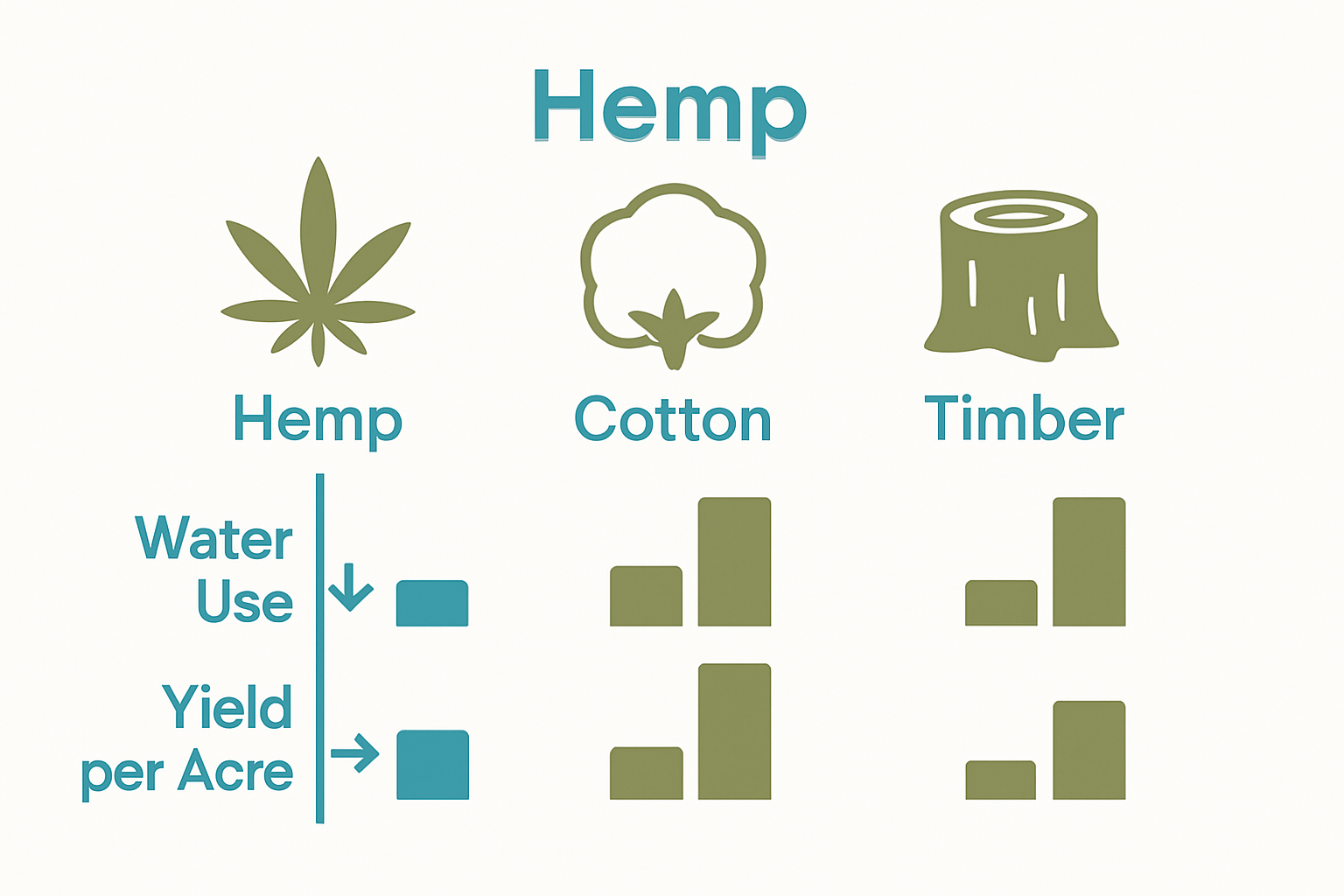
The comparative advantages of hemp extend beyond mere production efficiency. Hemp products consistently outperform conventional alternatives across multiple dimensions, including environmental impact, durability, and versatility. Textile hemp fabrics offer superior breathability and durability compared to cotton, while hemp paper products require fewer chemical processes and provide greater strength than wood-based papers. These inherent characteristics position hemp as a transformative material with potential to redesign entire manufacturing ecosystems.
Key comparative advantages of hemp include:
- Higher resource yield per acre
- Reduced water consumption
- Minimal chemical processing requirements
- Greater material durability
- Lower environmental degradation
- Faster renewable cycles
By systematically replacing conventional materials with hemp-based alternatives, industries can dramatically reduce their environmental footprint while simultaneously improving product performance and sustainability.
Key Certifications and Standards for Eco-Friendly Hemp
Navigating the complex landscape of hemp sustainability requires comprehensive certification frameworks that validate environmental and quality standards. These rigorous standards ensure hemp products meet stringent ecological and performance benchmarks, protecting both consumer interests and environmental integrity.
International quality standards for hemp play a critical role in establishing global market credibility. By defining precise guidelines, certification bodies help countries and manufacturers create transparent, reliable pathways for hemp product development and international trade. These standards address critical aspects such as cultivation practices, processing methods, chemical use, and overall environmental impact.
Implementing comprehensive hemp product certifications ensures sustainable practices across the entire production ecosystem. Rigorous certification processes evaluate factors like organic cultivation, water usage, carbon footprint, biodiversity preservation, and waste management, providing a holistic approach to environmental responsibility.
Key certification considerations include:
- Organic farming verification
- Sustainable agricultural practices
- Carbon footprint measurement
- Chemical and pesticide restrictions
- Biodiversity preservation standards
- Fair labor and production practices
- Renewable energy usage in processing
By establishing and adhering to robust certification standards, the hemp industry can demonstrate its commitment to ecological stewardship, transparency, and sustainable innovation.
Discover Sustainable Wellness with Eco-Friendly Hemp Smokes
The article highlights the importance of eco-friendly hemp cultivation and sustainable manufacturing practices that reduce chemical use and protect biodiversity. If you are looking for a natural, chemical-free alternative that respects these values while offering a healthier smoking experience, Full Moons Club brings you premium hemp cigarettes crafted from organic U.S.-grown hemp. Our commitment to sustainability is reflected in every detail from the cannabinoid-rich hemp to FSC-certified, biodegradable papers and filters.

Elevate your wellness routine and support eco-conscious hemp farming by choosing Full Moons Club products. Explore how our carefully rolled hemp cigarettes can enhance your mindfulness rituals, support stress relief, and provide a tobacco-free alternative without compromising your environmental values. Visit Full Moons Club now to experience the healthier way to enjoy hemp. Act today to enjoy fast nationwide shipping and embrace a sustainable lifestyle with every smoke.
Frequently Asked Questions
What benefits does eco-friendly hemp cultivation provide for the environment?
Eco-friendly hemp cultivation minimizes chemical interventions, enhances soil health, promotes biodiversity, and prevents soil erosion. It’s also effective in carbon sequestration, making it a powerful tool for climate action.
How does hemp contribute to soil health compared to conventional crops?
Hemp’s deep root system improves soil structure by breaking up compacted soil and enhancing water infiltration. Its ability to absorb residual herbicides and pesticides also reduces the need for chemical inputs, promoting overall soil health and ecological balance.
What are the key differences between hemp and conventional materials?
Hemp offers higher resource yield per acre, requires less water, and involves minimal chemical processing compared to conventional materials. Additionally, hemp products are generally more durable and environmentally friendly, making them a superior choice in many applications.
What certifications should I look for when choosing eco-friendly hemp products?
Look for certifications that verify organic farming practices, sustainable agricultural methods, carbon footprint measurements, and biodiversity preservation standards. These certifications ensure that hemp products are produced with environmental responsibility in mind.