

Finding stress relief without relying on tobacco can feel challenging for wellness-focused adults across the United States. As CBD becomes increasingly popular, questions about its safety and legal status highlight the need for reliable information. This guide sheds light on CBD’s true safety profile, the range of product types available, federal and state regulations, and how to choose chemical-free, sustainable CBD alternatives for those seeking a healthier, more mindful relaxation option.
Table of Contents
- CBD Explained: Safety Facts And Misconceptions
- CBD Product Types And Key Differences
- Legal Status Of CBD Smokes In The U.S.
- Safe Use: Dosage, Consumption, And Purity
- Risks, Drug Interactions, And Who Should Avoid
- Choosing Sustainable, Chemical-Free CBD Alternatives
Key Takeaways
| Point | Details |
|---|---|
| Safety Considerations | CBD can cause side effects and interacts with certain medications; consult healthcare professionals for personalized advice. |
| Product Variability | Not all CBD products are of equal quality; verify lab testing and choose reputable brands. |
| Legal Landscape | CBD regulations vary by state; ensure compliance with local laws before consumption. |
| Sustainable Choices | Opt for sustainable CBD products that prioritize environmental health and chemical-free processes. |
CBD Explained: Safety Facts and Misconceptions
Cannabidiol (CBD) has rapidly emerged as a wellness compound, generating both excitement and confusion among health-conscious consumers. While promising, understanding its safety profile requires careful examination of scientific evidence and potential risks.
CBD is a non-psychoactive compound derived from hemp and marijuana plants, with varying legal status across U.S. states. Unlike THC, CBD does not produce a “high” sensation, making it attractive for those seeking potential therapeutic benefits without intoxication.
Key safety considerations for CBD users include:
- Potential side effects like dry mouth, drowsiness, and reduced appetite
- Variability in product quality and concentration
- Possible interactions with other medications
- Lack of comprehensive long-term research
Medical Perspectives: Research indicates that while CBD is generally well-tolerated, consumers should approach its use cautiously. Clinical evidence remains limited for many proposed benefits, with the strongest scientific support currently existing for treating certain epilepsy syndromes.
Understanding product sources, seeking third-party lab testing, and consulting healthcare professionals are critical steps in responsible CBD consumption. Quality matters significantly - not all CBD products are created equal.
Review this summary of key CBD safety considerations for informed use:
| Safety Issue | What to Watch For | Action Step |
|---|---|---|
| Side Effects | Drowsiness, appetite change | Monitor response, adjust dosage |
| Product Quality | Contaminants, inconsistent strength | Verify lab testing, choose trusted brands |
| Drug Interactions | Changes in medication metabolism | Discuss all meds with provider |
| Dosage Uncertainty | No universal guideline | Start low, increase gradually |
Pro tip: Always verify CBD product lab reports and start with low doses, monitoring your body’s individual response carefully.
CBD Product Types and Key Differences
CBD products have evolved dramatically, offering consumers multiple options to suit diverse wellness needs. Different CBD product types present unique characteristics that significantly impact their effectiveness, absorption, and potential benefits.
The primary CBD product categories include:
- Full-spectrum CBD: Contains all hemp plant compounds, including trace THC
- Broad-spectrum CBD: Includes multiple cannabinoids without THC
- CBD Isolate: Pure CBD without additional cannabinoids
- CBD Delivery Methods: Oils, tinctures, edibles, capsules, topicals, and vapes
Each product type offers distinct advantages. Full-spectrum CBD potentially provides enhanced therapeutic effects through the entourage effect, where cannabinoids work synergistically. Broad-spectrum products offer similar benefits without THC, making them attractive for users concerned about psychoactive compounds.
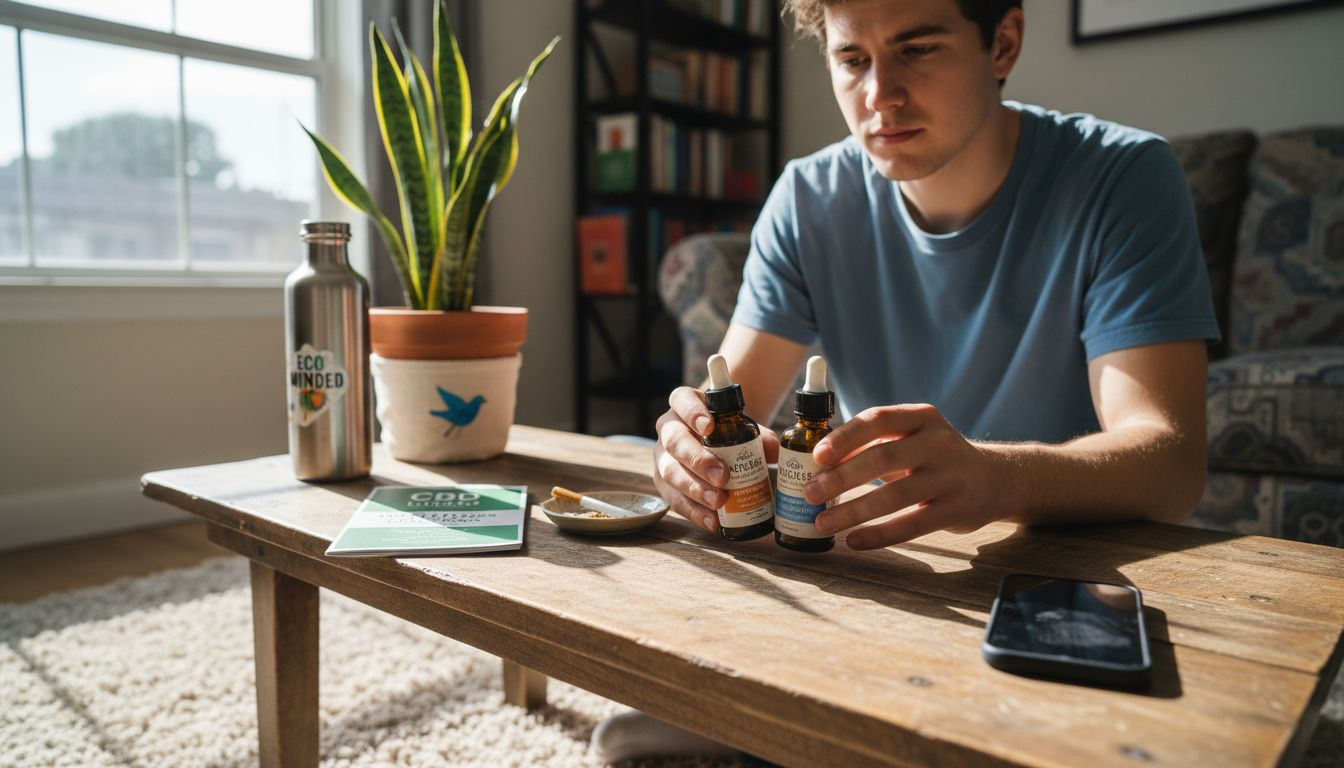
Product Composition Insights: Consumers should understand that CBD product variations impact bioavailability and effects, with factors like extraction method, cannabinoid profile, and additional ingredients playing crucial roles in overall wellness potential.
Here is a comparison of common CBD product types to help you choose what fits your needs:
| Product Type | Cannabinoid Content | THC Presence | Typical Uses |
|---|---|---|---|
| Full-spectrum | Broad range, all cannabinoids | Trace amounts (<0.3%) | General wellness, potential entourage effect |
| Broad-spectrum | Multiple cannabinoids | None | THC-free wellness, sensitive users |
| CBD Isolate | Pure CBD only | None | Targeted relief, avoiding all other cannabinoids |
| Edibles/Capsules | Varies by formula | Varies by source | Discreet, long-lasting effects |
| Topicals | May include additional botanicals | None or trace | Targeted, external application |
Pro tip: Consult healthcare professionals and carefully review third-party lab testing to select CBD products most aligned with your individual health goals and tolerance levels.
Legal Status of CBD Smokes in the U.S.
Navigating the legal landscape of CBD smokes requires careful understanding of complex federal and state regulations. Cannabis legality varies dramatically across U.S. jurisdictions, creating a nuanced environment for consumers and producers alike.
Key legal considerations for CBD smokes include:
- Federal Regulations: Hemp-derived CBD with less than 0.3% THC is federally legal
- State Variations: 40 states permit medical cannabis, while 24 allow recreational use
- Product Composition: THC content and hemp source significantly impact legal status
- Consumption Method: Smoking regulations differ from other CBD consumption forms
Regulatory Complexity: While hemp-derived CBD products are technically federally legal, state-level restrictions create a patchwork of regulations that consumers must carefully navigate. Marijuana-derived CBD remains federally illegal, though some states permit its use under specific medical or recreational cannabis programs.
Consumers should remain vigilant about changing regulations, as the legal landscape continues to evolve rapidly. Understanding both federal and state-specific guidelines is crucial for responsible CBD smoke consumption.
Pro tip: Always verify current local regulations and consult legal professionals to ensure full compliance with CBD smoke consumption in your specific state.
Safe Use: Dosage, Consumption, and Purity
Understanding CBD usage requires a nuanced approach to dosage, consumption methods, and product quality. Optimal CBD dosage varies significantly based on individual factors, making personalized guidance crucial for safe and effective use.
Key considerations for responsible CBD consumption include:
- Individual Response: Effects differ based on body chemistry
- Administration Methods: Varied bioavailability across consumption types
- Starting Dosage: Begin with low doses and gradually increase
- Product Quality: Prioritize third-party tested products
Dosage Guidelines: Consumers should approach CBD consumption methodically. Different administration methods like sublingual, inhaled, and oral forms present unique absorption profiles and onset times. FDA regulations currently lack consistent oversight for product purity, making independent research and verification essential.
Prioritizing product quality means seeking Certificates of Analysis, understanding extraction methods, and consulting healthcare professionals for personalized guidance. Reputable brands provide transparent testing results that demonstrate cannabinoid content and potential contaminant screening.
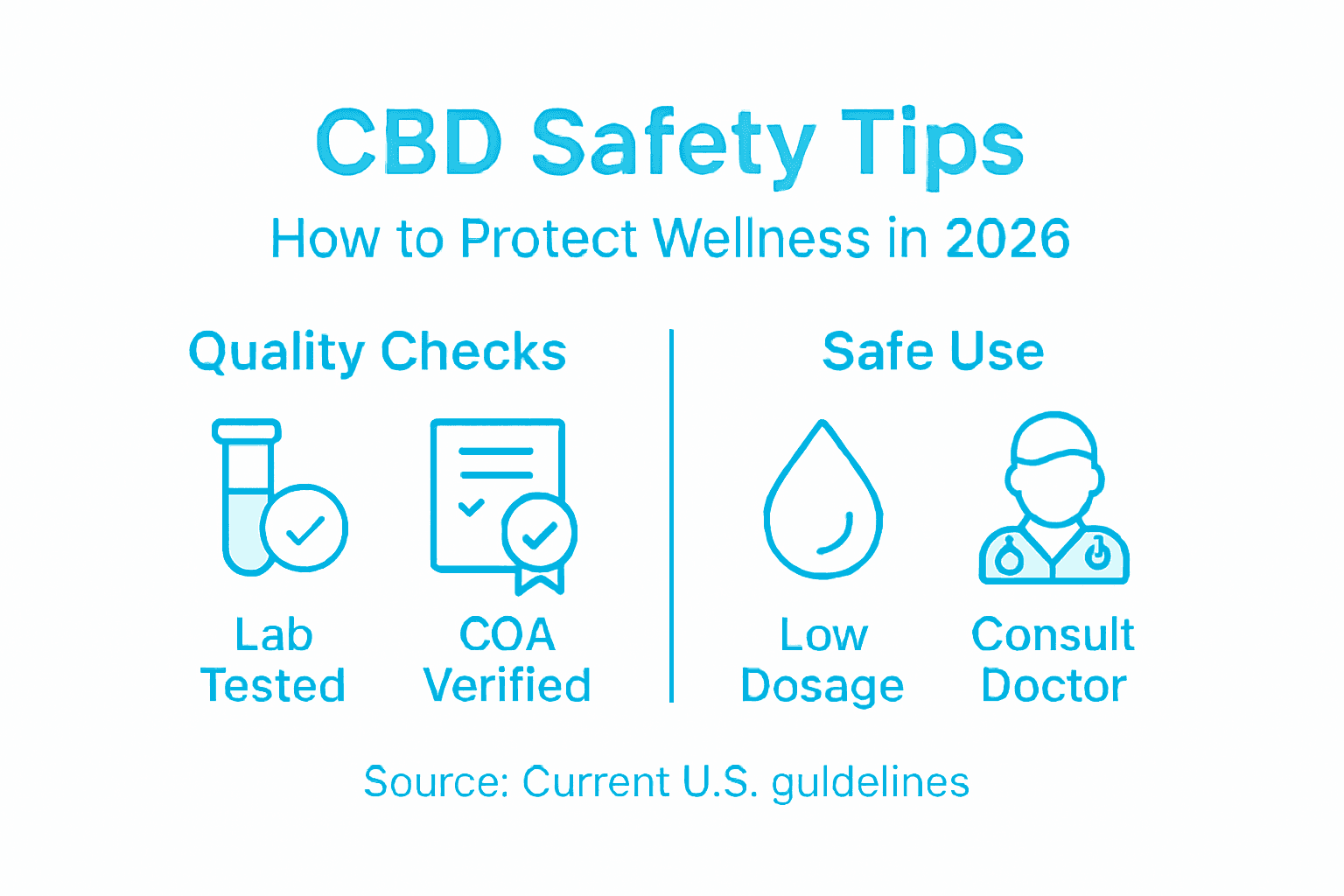
Pro tip: Start with the lowest recommended dose, track your body’s response carefully, and incrementally adjust while maintaining rigorous attention to product quality and third-party testing.
Risks, Drug Interactions, and Who Should Avoid
Understanding potential CBD risks requires careful consideration of individual health circumstances and medication interactions. CBD can significantly impact drug metabolism, potentially altering the effectiveness of various pharmaceutical treatments.
Key groups who should exercise extreme caution or avoid CBD include:
- Pregnant/Breastfeeding Individuals: Insufficient safety data
- People on Blood Thinners: Potential dangerous interactions
- Individuals with Cardiac Conditions: Risk of metabolic complications
- Those Taking Psychiatric Medications: Potential enzyme disruption
Potential Side Effects: CBD may cause several physiological reactions, including dry mouth, drowsiness, reduced appetite, and fatigue. Medication interactions can create complex health risks, particularly for individuals taking medications metabolized by liver enzymes.
Medical professionals strongly recommend comprehensive consultation before incorporating CBD into any wellness regimen. Understanding individual biochemistry, current medications, and potential contraindications is crucial for safe consumption.
Pro tip: Always disclose your complete medication list to healthcare providers and request a thorough review before starting any CBD regimen.
Choosing Sustainable, Chemical-Free CBD Alternatives
Consumers increasingly demand environmentally responsible wellness products that minimize ecological impact. Sustainable CBD production emphasizes green chemistry principles, prioritizing renewable resources and reducing chemical hazards throughout manufacturing processes.
Key characteristics of sustainable CBD alternatives include:
- Biomass-Based Extraction: Using natural, renewable source materials
- Biodegradable Packaging: Minimizing plastic pollution
- Carbon-Neutral Processing: Reducing greenhouse gas emissions
- Natural Chemical Alternatives: Replacing petroleum-based compounds
Environmental Health Considerations: Green chemistry aims to protect consumers and ecosystems by designing products that are inherently safer and more environmentally friendly. This approach goes beyond traditional manufacturing, focusing on creating wellness solutions that benefit both human and environmental health.
Sustainable CBD alternatives represent a critical evolution in wellness technology, bridging the gap between personal health and ecological responsibility. By choosing products designed with green chemistry principles, consumers can support both their individual wellness and broader environmental sustainability goals.
Pro tip: Research brands that provide transparent information about their extraction methods, sourcing practices, and environmental certifications before purchasing CBD products.
Experience Safe and Sustainable CBD Smokes with Full Moons Club
Navigating the complex world of CBD safety can be overwhelming. This article highlights crucial challenges like verifying product quality, avoiding harmful chemicals, and understanding legal and dosage considerations. If you value a tobacco-free, nicotine-free alternative crafted from organic U.S.-grown hemp that puts your wellness first, Full Moons Club offers a premium solution designed to meet your needs.
Our selection of CBD smokes and hemp cigarettes is thoughtfully created with chemical-free ingredients, rolled in FSC-certified, biodegradable papers, ensuring you enjoy a clean and eco-friendly experience every time. With 0% THC and full transparency on product purity, you can confidently embrace a safe and relaxing ritual that aligns with the careful guidelines discussed.
Discover how to protect your wellness with a natural hemp smoking option that supports mindful consumption and sustainable practices. Visit Full Moons Club today and explore our collection of premium CBD smokes. Start your healthier tobacco-free journey now by selecting products crafted for safety, quality, and your unique needs.
Learn more about our premium hemp cigarettes and how they compare to traditional options. Elevate your wellness routine with proven quality at Full Moons Club.
Frequently Asked Questions
What are the potential side effects of using CBD?
Potential side effects of CBD include dry mouth, drowsiness, reduced appetite, and fatigue. It is essential to monitor your body’s response when starting CBD to manage any adverse effects.
How can I ensure the quality of my CBD products?
To ensure product quality, always choose CBD products that have undergone third-party lab testing. Look for Certificates of Analysis that indicate the cannabinoid content and the absence of harmful contaminants.
What are the differences between full-spectrum, broad-spectrum, and CBD isolate?
Full-spectrum CBD contains all cannabinoids, including trace amounts of THC, which may enhance therapeutic effects. Broad-spectrum CBD includes multiple cannabinoids but is THC-free. CBD isolate is pure CBD without any other cannabinoids, suitable for targeted relief without other compounds.
Who should avoid using CBD?
Individuals who are pregnant or breastfeeding, those on blood thinners, people with cardiac conditions, and those taking psychiatric medications should exercise caution or avoid CBD entirely. Always consult a healthcare professional before starting CBD, especially if you have underlying health issues.
Recommended
- 7 Key Tips from the CBD Product Guide 2025 – Full Moons Club
- The Complete Guide to CBD Cigarettes: Benefits, Usage, and Insights – Full Moons Club
- The Ultimate Guide to CBD Cigarettes: Benefits, Uses, and Consideratio – Full Moons Club
- Understanding CBD Smoking Guide 2025 for Wellness – Full Moons Club
- 7 Key Cannabis Culture Trends Shaping 2025 for Wellness – California Blendz