

Finding natural stress relief can feel like a maze for the average American seeking wellness solutions. Confusion about CBD and hemp is common since both come from the same plant yet serve different purposes. With more than 40% of American adults expressing interest in cannabinoid products, understanding these differences is vital for anyone wanting high-quality, natural options. This guide gives you the facts needed to make smart, informed choices about CBD versus hemp for your wellness journey.
Table of Contents
- CBD vs. Hemp: Core Definitions Explained
- Types of CBD and Hemp Products Compared
- Key Benefits and Uses for Wellness
- Legal Status and Safety in the United States
- How to Choose the Right Smoking Alternative
Key Takeaways
| Point | Details |
|---|---|
| Understanding the Difference | CBD is a specific cannabinoid extracted from hemp, which is defined as Cannabis containing less than 0.3% THC. Both have different uses and legal statuses in the U.S. |
| Product Types Variety | Hemp and CBD products range from gummies to oils, each serving distinct wellness purposes. Consumers should assess extraction methods and intended uses when choosing products. |
| Legal Context | Hemp is federally legal due to the 2018 Farm Bill, but state regulations can vary significantly, necessitating caution among consumers. |
| Safety Considerations | Always verify third-party lab test results for hemp and CBD products to ensure safety, quality, and compliance with legal standards. |
CBD vs. Hemp: Core Definitions Explained
Understanding the nuanced differences between CBD and hemp starts with recognizing their botanical origins in the Cannabis sativa plant. While often used interchangeably, these terms represent distinct aspects of a complex botanical landscape. Cannabis species contain multiple compounds, with hemp specifically defined as any part of the Cannabis plant containing less than 0.3% delta-9-tetrahydrocannabinol (THC).
Hemp is fundamentally an industrial crop cultivated for multiple purposes including fiber, seeds, and oil production. Its low THC content makes it non-intoxicating and federally legal across the United States. CBD, by contrast, is a specific cannabinoid extracted from hemp plants that interacts with the human body’s endocannabinoid system. While CBD can be derived from hemp, not all hemp products contain meaningful quantities of this beneficial compound.
The legal and botanical distinctions are critical for wellness-focused consumers. Industrial hemp varieties are primarily grown for agricultural and manufacturing purposes, featuring minimal cannabinoid concentrations. CBD-rich hemp strains, however, are specifically cultivated to maximize cannabinoid content, offering potential therapeutic benefits without psychoactive effects. This means consumers can explore hemp-derived products with confidence, knowing they remain within federal regulatory guidelines.
Pro tip: When purchasing hemp or CBD products, always request third-party lab testing to verify cannabinoid content and ensure you’re getting a high-quality, federally compliant product.
Types of CBD and Hemp Products Compared
Hemp and CBD products represent a diverse landscape of wellness offerings, ranging across multiple consumer categories. These products can be broadly categorized into several distinct types, each serving different wellness needs and preferences. Ingestible options include CBD gummies, tinctures, and capsules, while topical applications like creams and ointments provide targeted relief for specific areas of the body.
The versatility of hemp extends far beyond cannabinoid products. Industrial hemp generates fiber for textiles, seeds for nutritional purposes, and oils for various applications. Wellness enthusiasts can find hemp-derived products in multiple formats: consumable oils, protein powders, skincare formulations, and concentrated cannabinoid extracts. These diverse offerings make hemp and CBD accessible to consumers seeking natural alternatives for health and lifestyle enhancement.

Understanding product differences is crucial for making informed choices. Some products focus on full-spectrum cannabinoid profiles, while others offer isolated CBD compounds. Wellness seekers should consider factors like extraction method, cannabinoid concentration, and intended use when selecting hemp or CBD products. The market includes everything from hemp-derived cannabinoid wellness solutions to pure hemp seed nutritional supplements.
This table offers a comparison of popular hemp and CBD product types and their typical wellness applications:
| Product Type | Common Format | Typical Wellness Use |
|---|---|---|
| CBD Gummies | Edible chewables | Stress relief, sleep support |
| Hemp Protein | Powder supplement | Nutrition, muscle recovery |
| CBD Creams | Topical ointments | Localized pain relief |
| Hemp Oil | Cooking oil | Heart health, skin hydration |
Pro tip: Always verify third-party lab testing results and cannabinoid content before purchasing any hemp or CBD product to ensure quality, potency, and federal compliance.
Key Benefits and Uses for Wellness
Potential health applications of CBD and hemp products have garnered significant attention in wellness circles. Researchers have identified several promising areas where these natural compounds might offer support, including pain management, anxiety reduction, and inflammation control. While scientific evidence remains evolving, many individuals report experiencing positive effects from incorporating hemp-derived products into their wellness routines.
The spectrum of potential benefits is broad, with some of the most studied applications focusing on neurological and mental health conditions. Current medical research suggests CBD might help manage certain seizure disorders and provide anxiety relief. Wellness enthusiasts are increasingly exploring these natural alternatives as complementary approaches to traditional healthcare strategies, particularly for managing stress, supporting sleep quality, and promoting overall mental well-being.
Understanding the nuanced differences between hemp seed oil and CBD oil is crucial for consumers. Hemp seed oil primarily offers nutritional benefits, rich in essential fatty acids and proteins, while CBD oil potentially provides more targeted wellness support. Individuals considering these products should consult comprehensive wellness guides to understand appropriate usage, potential interactions, and recommended dosages for their specific health goals.
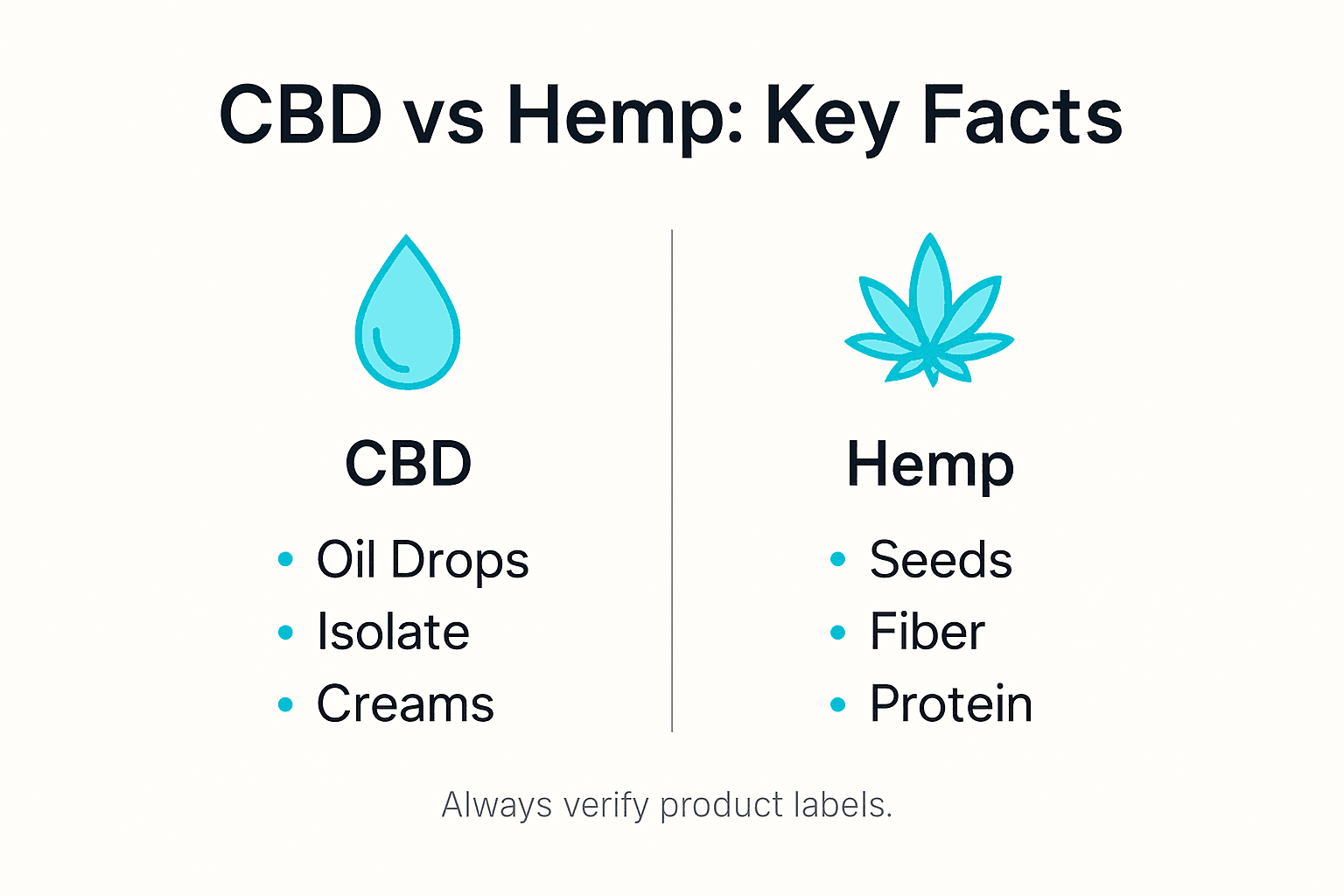
Here’s a summary comparing CBD oil and hemp seed oil uses and wellness impacts:
| Attribute | CBD Oil | Hemp Seed Oil |
|---|---|---|
| Primary Use | Targeted wellness support | Nutritional benefits |
| Key Components | Cannabinoids like CBD | Essential fatty acids, proteins |
| Potential Benefits | May support anxiety, pain, sleep | Improves heart health, skin, nutrition |
| Typical Extraction | From hemp flowers | From hemp seeds |
Pro tip: Always consult with a healthcare professional before integrating new hemp or CBD products into your wellness routine, especially if you have pre-existing medical conditions or are taking other medications.
Legal Status and Safety in the United States
The 2018 Farm Bill fundamentally transformed hemp’s legal landscape, removing hemp with less than 0.3% THC from controlled substance schedules and opening new pathways for cultivation and commercial distribution. This landmark legislation created a clear federal framework distinguishing hemp from marijuana, enabling businesses and consumers to engage with hemp-derived products more confidently. However, the regulatory environment remains complex, with ongoing oversight from multiple federal agencies.
Navigating the current legal terrain requires understanding nuanced distinctions. While hemp and its derivatives are federally legal, the FDA maintains strict regulations concerning safety and marketing of cannabinoid products. State-level regulations create a patchwork of legal requirements, meaning permissibility can vary significantly depending on geographic location. Consumers must remain vigilant about local laws and potential restrictions on hemp and CBD products.
Safety remains a critical consideration for wellness-focused individuals. Unregulated hemp products pose potential risks, including inconsistent cannabinoid concentrations and potential unexpected interactions. Responsible consumption requires careful research, third-party lab testing verification, and consultation with healthcare professionals. Comprehensive wellness guides can provide additional insights into navigating these complex regulatory landscapes.
Pro tip: Always verify local state regulations and consult with a healthcare professional before purchasing or consuming any hemp or CBD products to ensure compliance and personal safety.
How to Choose the Right Smoking Alternative
Selecting an appropriate smoking alternative requires careful consideration of multiple factors, including health objectives, legal compliance, and personal wellness goals. Smokers seeking healthier alternatives must navigate a complex landscape of products, understanding the nuanced differences between traditional tobacco, hemp-derived options, and cannabinoid-infused alternatives. Critically, these choices extend beyond mere habit replacement to potential wellness enhancement.
Key considerations for choosing a smoking alternative include assessing THC content, understanding potential health impacts, and verifying product legality. Hemp-derived smoking products offer unique advantages, providing a potentially lower-risk option compared to traditional tobacco. Smokers switching from traditional cigarettes can explore herbal alternatives that deliver a similar sensory experience without the harmful chemicals associated with nicotine consumption. These alternatives often feature organic ingredients, controlled cannabinoid profiles, and a more mindful approach to personal wellness.
Understanding product composition is crucial for making an informed decision. Different hemp and CBD smoking alternatives offer varied experiences, from purely herbal options to those containing specific cannabinoid concentrations. Consumers should prioritize products with transparent labeling, third-party lab testing, and clear information about cannabinoid content. The goal is finding a smoking alternative that aligns with individual health preferences, potential therapeutic needs, and personal comfort levels.
Pro tip: Always request comprehensive lab testing results and verify the legal status of hemp-derived smoking products in your specific state before making a purchase.
Discover a Healthier Hemp Experience with Full Moons Club
Navigating the differences between CBD and hemp can feel overwhelming when seeking natural wellness solutions that are safe, legal, and effective. If you are looking for a clean, tobacco-free, and nicotine-free smoking alternative made from organically grown American hemp rich in cannabinoids like CBD, CBG, and CBC, your search ends here. Many wellness seekers face challenges around finding products with transparent cannabinoid content and federally compliant THC levels under 0.3 percent. Full Moons Club understands these key concerns from the article and offers expertly crafted herbal cigarettes rolled in eco-friendly materials designed to elevate relaxation, stress relief, and mindfulness rituals.
Experience a smooth, chemical-free smoke that respects your health goals and complies with federal regulations. With fast, nationwide shipping and third-party lab-tested quality, Full Moons Club makes switching to hemp-based smoking alternatives simple and trustworthy. Take control of your wellness journey today by exploring our premium selection of CBD smokes and hemp cigarettes at Full Moons Club. Discover how natural hemp can support your lifestyle without compromise.
Frequently Asked Questions
What is the main difference between CBD and hemp?
CBD is a specific cannabinoid extracted from the hemp plant, while hemp refers to the Cannabis sativa plant containing less than 0.3% THC. Hemp is used for various industrial purposes, including fiber and oil production, while CBD is known for its potential therapeutic benefits.
Can hemp products contain CBD?
Yes, hemp products can contain CBD, but not all hemp products contain significant amounts of this cannabinoid. Products specifically cultivated for higher CBD content will have meaningful levels of this compound.
What are some common types of CBD and hemp products?
Common types of CBD products include gummies, oils, and creams, while hemp products can include protein powders, seeds, and cooking oils. Each type serves different wellness needs, such as stress relief or nutritional benefits.
What should I consider when choosing CBD or hemp products?
When choosing CBD or hemp products, consider factors like extraction methods, cannabinoid concentration, third-party lab testing, and your wellness goals. It’s essential to ensure the products comply with legal regulations and meet quality standards.