

Nearly half of American adults are now turning to natural remedies to ease everyday stress, searching for alternatives that prioritize wellness and sustainability. The world of hemp-derived cannabinoids offers promising, tobacco-free options without the heavy psychoactive effects often associated with traditional cannabis products. This guide breaks down the science, clears up common misconceptions, and helps you navigate the health benefits and quality standards, empowering informed choices toward stress relief and better balance.
Table of Contents
- Defining Hemp-Derived Cannabinoids And Misconceptions
- Major Types: CBD, CBG, CBC And Beyond
- How Cannabinoids Affect The Body And Mind
- Health Benefits And Everyday Use Cases
- Safety, Legality, And Quality Assurance In The U.S.
Key Takeaways
| Point | Details |
|---|---|
| Hemp-Derived Cannabinoids Differ from THC Products | Hemp-derived cannabinoids, such as CBD, CBG, and CBC, offer potential wellness benefits without significant psychoactive effects, distinguishing them from traditional marijuana products. |
| Quality Assurance is Crucial | Consumers should prioritize third-party lab-tested products and review Certificates of Analysis to ensure safety, potency, and purity. |
| Diverse Applications and Benefits | These cannabinoids have diverse applications, from pain relief to stress management, and emerging research highlights their therapeutic potential. |
| Understand Regulatory Challenges | The hemp-derived cannabinoid market in the U.S. has varying state regulations, creating the need for informed consumer choices regarding product quality. |
Defining Hemp-Derived Cannabinoids and Misconceptions
Hemp-derived cannabinoids represent a complex family of chemical compounds extracted from the Cannabis sativa plant, primarily distinguished by their low tetrahydrocannabinol (THC) content. These compounds emerge from non-intoxicating hemp cultivars that contain 0.3% or less delta-9 THC, setting them apart from marijuana varieties with higher psychoactive concentrations.
Understanding these compounds requires recognizing their diverse chemical profiles and potential wellness applications. Hemp-derived cannabinoids like cannabidiol (CBD) are extracted through sophisticated processing techniques that isolate specific molecular structures without producing intoxicating effects. Unlike marijuana, which contains significant THC levels, hemp-derived products focus on delivering potential therapeutic benefits without substantial psychoactive impacts. Key cannabinoids in this category include CBD, CBC, CBG, and emerging synthetic variants like delta-8 THC, each presenting unique molecular characteristics and potential interactions with the human endocannabinoid system.
Misconceptions about hemp-derived cannabinoids often stem from confusion between hemp and marijuana. While both originate from the Cannabis sativa species, their regulatory and chemical distinctions are critical. Many consumers mistakenly believe all cannabis-related products produce intoxicating effects, when in fact, hemp-derived options are designed to provide potential wellness support without significant psychoactive experiences. These products undergo rigorous extraction and processing to ensure minimal THC presence and maximize beneficial cannabinoid concentrations.
Pro tip: Always verify third-party lab testing results and cannabinoid content before purchasing hemp-derived products to ensure quality, safety, and alignment with your wellness goals.
Major Types: CBD, CBG, CBC and Beyond
Hemp-derived cannabinoids represent a diverse spectrum of compounds, with each type offering unique potential wellness benefits. Cannabidiol (CBD) remains the most recognized cannabinoid, renowned for its non-intoxicating properties and widespread use in wellness products. As the primary cannabinoid in hemp extracts, CBD interacts with the body’s endocannabinoid system to potentially support relaxation, stress management, and overall balance.
Beyond CBD, Cannabigerol (CBG) and Cannabichromene (CBC) are emerging as promising minor cannabinoids with intriguing potential. These less abundant compounds are gaining attention for their unique molecular structures and potential therapeutic applications. Emerging research explores their interactions with the human body’s complex biological systems, suggesting potential benefits that extend beyond traditional CBD applications.
The cannabinoid landscape also includes various forms of THC, such as delta-8, delta-10, and hexahydrocannabinol (HHC). Unlike CBD, these compounds possess psychoactive properties, with delta-8 THC providing a milder experience compared to traditional delta-9 THC. It’s crucial to understand that these synthetic cannabinoids are chemically processed from hemp extracts, each presenting distinct molecular characteristics and potential effects on the human body.
Pro tip: Consult with a healthcare professional and carefully research the specific properties of each cannabinoid to understand their potential interactions and effects on your individual wellness journey.
Here’s a summary comparison of major hemp-derived cannabinoids and their primary effects:
| Cannabinoid | Typical Effects | Intoxication Level | Notable Applications |
|---|---|---|---|
| CBD | Calming, stress relief | Non-intoxicating | Pain, anxiety, sleep |
| CBG | Anti-inflammatory, neuroprotective | Non-intoxicating | Gut health, inflammation |
| CBC | Mood support, anti-inflammatory | Non-intoxicating | Mental health, pain |
| Delta-8 THC | Mild euphoria, relaxation | Mildly intoxicating | Appetite, nausea |
| HHC | Euphoria, relaxation | Intoxicating | Mood, recreation |
How Cannabinoids Affect the Body and Mind
Cannabinoids interact with the human body through a sophisticated network of biological receptors, fundamentally influencing neurological and immune system responses. The endocannabinoid system serves as a critical communication pathway, with cannabinoid receptors (CB1 and CB2) strategically located throughout the brain and body. These receptors play a pivotal role in regulating numerous physiological processes, including mood, pain perception, immune function, and stress response.

Cannabidiol (CBD) demonstrates unique interactions within this complex system, modulating receptor activity without producing psychoactive effects. Unlike tetrahydrocannabinol (THC), which directly binds to CB1 receptors and creates intoxicating experiences, CBD acts as a more subtle molecular messenger. This nuanced interaction potentially supports anti-inflammatory responses, reduces oxidative stress, and provides neuroprotective benefits without compromising cognitive function.
The intricate relationship between cannabinoids and human biology extends beyond simple receptor interactions. Emerging research suggests that the combined effect of cannabinoids, alongside other plant compounds like terpenes, creates a synergistic wellness impact. This phenomenon, known as the entourage effect, indicates that cannabinoids work most effectively when consumed in their natural, complementary state, potentially enhancing overall therapeutic potential.
Pro tip: Start with low dosages and observe your body’s individual response, as cannabinoid interactions can vary significantly between individuals.
Health Benefits and Everyday Use Cases
Hemp-derived cannabinoids offer a spectrum of wellness applications that extend far beyond traditional supplement approaches. Cannabidiol (CBD) and related compounds have demonstrated potential in addressing multiple health concerns, including pain management, stress reduction, and sleep support. These natural compounds interact with the body’s biological systems to potentially modulate inflammation, regulate mood, and promote overall physiological balance.
The practical applications of hemp-derived cannabinoids span various wellness domains. Individuals increasingly incorporate these compounds into daily routines through diverse product formats like oils, topical treatments, and edibles. Cannabis plant compounds show promising medicinal properties, including antioxidant and anti-inflammatory effects, making them attractive alternatives for those seeking natural health management strategies. Specific use cases include managing chronic discomfort, supporting mental clarity, and potentially mitigating oxidative stress.
Emerging cannabinoids such as CBG and CBC are expanding the wellness landscape, with early research suggesting potential therapeutic benefits across multiple physiological systems. While more comprehensive studies are needed, these compounds demonstrate promising interactions with human biology. The versatility of hemp-derived cannabinoids allows for personalized wellness approaches, with individuals tailoring their usage to specific health objectives and individual physiological responses.
Pro tip: Consult with healthcare professionals to develop a personalized cannabinoid wellness strategy that aligns with your specific health goals and existing medical conditions.
Safety, Legality, and Quality Assurance in the U.S.
The hemp-derived cannabinoid market in the United States operates within a complex regulatory landscape, characterized by evolving legal standards and quality challenges. Many hemp-derived products currently face significant mislabeling and contamination risks, highlighting the critical need for robust consumer protection mechanisms. The 2018 Farm Bill legalized hemp derivatives containing less than 0.3% delta-9 THC, but simultaneously created a regulatory framework with notable enforcement gaps.
Federal and state regulations currently create a nuanced compliance environment for hemp-derived cannabinoid producers. While the Farm Bill opened legal pathways for hemp products, individual states maintain varying standards for testing, production, and sale. Consumers must navigate these complex requirements, understanding that product quality can differ dramatically between manufacturers. Rigorous third-party laboratory testing has become essential for verifying cannabinoid content, ensuring purity, and detecting potential contaminants like heavy metals or residual solvents.
Quality assurance in the hemp-derived cannabinoid market requires a multifaceted approach. Reputable manufacturers now implement comprehensive testing protocols, including potency verification, pesticide screening, and microbiological analysis. Consumers should prioritize products from transparent companies that provide comprehensive Certificate of Analysis (COA) documentation, detailing the exact cannabinoid profile and potential contaminant levels. This commitment to transparency helps build trust in an industry still working to establish consistent national regulatory standards.
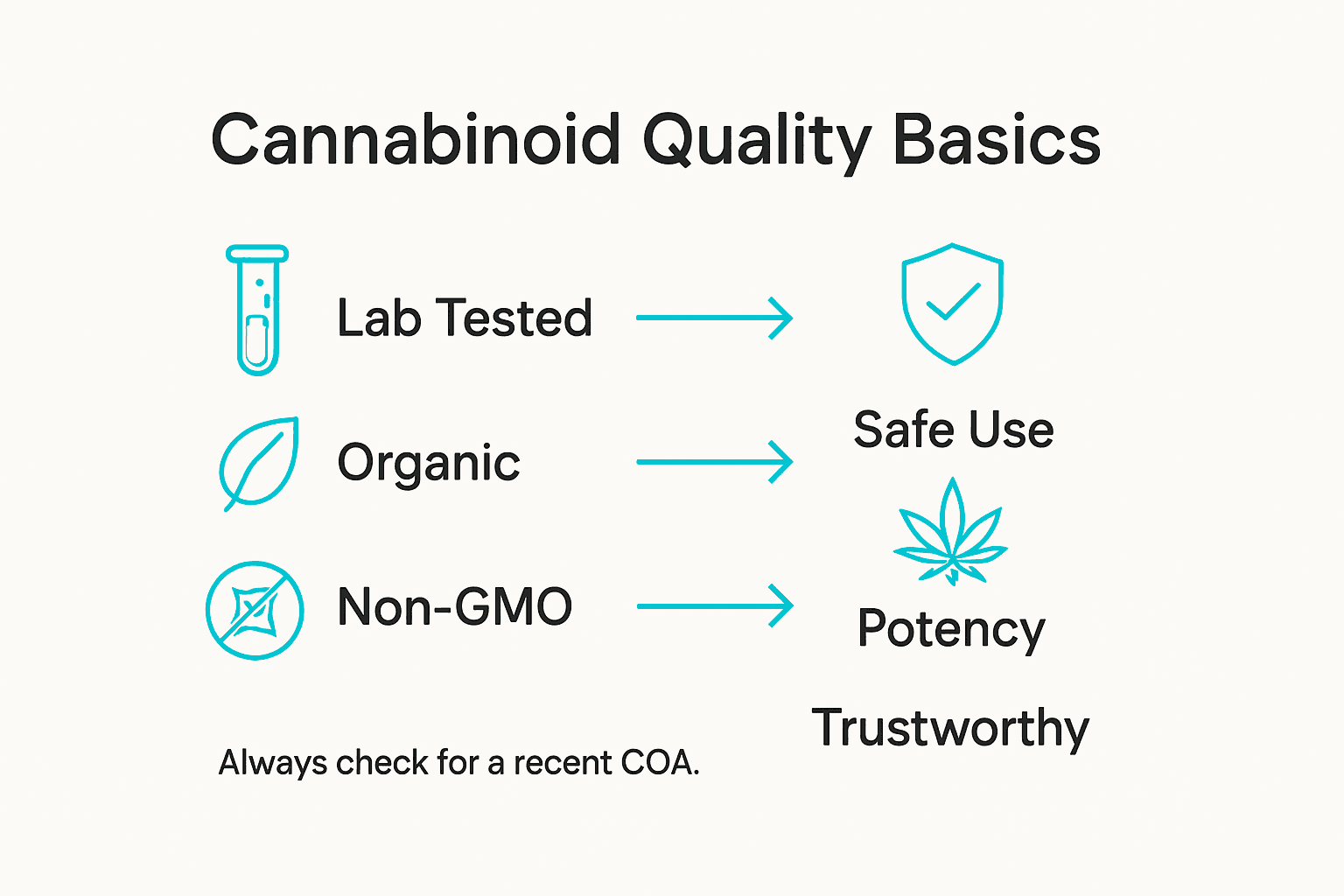
To better understand safety, here are key quality assurance measures and their benefits:
| Quality Measure | What It Ensures | Consumer Benefit |
|---|---|---|
| Third-party testing | Verifies purity and potency | Better safety, trustworthy results |
| COA documentation | Confirms compound content | Informed product choice |
| Pesticide screening | Detects harmful chemicals | Reduced health risks |
| Microbial analysis | Checks for bacteria or mold | Product freshness, safety |
Pro tip: Always request and carefully review the full Certificate of Analysis for any hemp-derived cannabinoid product, checking for comprehensive testing details and potential contaminants before making a purchase.
Discover Natural Wellness with Hemp-Derived Cannabinoids and Full Moons Club
Navigating the world of hemp-derived cannabinoids can be confusing with so many options like CBD, CBG, and CBC offering unique wellness benefits without intoxicating effects. If your goal is to find a natural, trusted alternative to traditional tobacco products while embracing the calming, anti-inflammatory, and stress-relieving properties of hemp compounds you need solutions that align with your wellness journey and prioritize safety and quality.
Full Moons Club understands these challenges and offers premium CBD smokes and hemp cigarettes crafted from organic U.S.-grown hemp rich in multiple cannabinoids like CBD, CBG, and CBC. Our products are 0% THC, federally legal, and made with eco-friendly materials for a smooth, chemical-free experience that supports relaxation and mindfulness without harmful additives. Explore how you can elevate your everyday routine with a natural, tobacco-free alternative designed specifically for your health and lifestyle at Full Moons Club.
Ready to embrace the calming benefits of hemp in a convenient, smokeable form

Visit Full Moons Club today and shop our collection of hemp smokes that combine premium cannabinoid extracts with sustainable craftsmanship for a healthier way to relax and recharge. Take control of your wellness with a trusted brand that knows the power of hemp-derived cannabinoids.
Frequently Asked Questions
What are hemp-derived cannabinoids?
Hemp-derived cannabinoids are chemical compounds extracted from the Cannabis sativa plant, primarily from non-intoxicating hemp cultivars that contain 0.3% or less delta-9 THC. They include cannabinoids like CBD, CBG, and CBC, each offering potential wellness applications without significant psychoactive effects.
How do different cannabinoids like CBD, CBG, and CBC affect the body?
CBD is known for its calming effects and potential to relieve pain and anxiety. CBG may offer anti-inflammatory and neuroprotective benefits, while CBC shows promise in supporting mood and mental health. Each cannabinoid interacts with the body’s endocannabinoid system differently, contributing to various therapeutic effects.
What should I consider when using hemp-derived cannabinoids for wellness?
When using hemp-derived cannabinoids, consider starting with low dosages to observe your body’s response. It’s also essential to consult with a healthcare professional and choose products backed by third-party lab testing to ensure quality, safety, and accurate cannabinoid content.
Are hemp-derived cannabinoids safe to use?
While hemp-derived cannabinoids are generally considered safe, product quality can vary. It’s crucial to choose products that provide Certificates of Analysis (COA) for transparency in cannabinoid content and potential contaminants. Always consult with healthcare professionals if you have existing health conditions or are taking medications.