

Finding a healthier way to quit smoking can feel overwhelming when so many options promise quick fixes. For many American adults, moving from cigarettes to organic, nicotine-free hemp products offers hope for genuine stress relief. By focusing on your unique motivations, choosing carefully tested hemp alternatives, and developing supportive new routines, you can transform quitting into a clear, structured path toward better health.
Table of Contents
- Step 1: Assess Your Motivation For Quitting Cigarettes
- Step 2: Set Up Your Transition Plan And Timeline
- Step 3: Choose Suitable Nicotine-Free Hemp Alternatives
- Step 4: Replace Tobacco Routines With Healthier Rituals
- Step 5: Verify Progress And Adjust Strategies As Needed
Quick Summary
| Key Point | Explanation |
|---|---|
| 1. Assess your personal motivations | Identify specific reasons for quitting, such as health benefits or financial savings, to stay driven. |
| 2. Create a structured quit plan | Develop a clear timeline and strategies for support and trigger management to guide your quitting process. |
| 3. Choose nicotine-free alternatives | Opt for organic hemp products that are free of nicotine and have been tested for safety to aid your transition. |
| 4. Replace smoking routines with health | Identify smoking triggers and create healthier habits that provide similar satisfaction without nicotine. |
| 5. Track your progress regularly | Monitor your quitting journey through self-check-ins and adjustments to strategies to ensure continued success. |
Step 1: Assess your motivation for quitting cigarettes
Quitting smoking begins with understanding your personal motivational landscape. This critical first step involves deeply examining why you want to stop smoking and what you hope to achieve by breaking free from tobacco dependency.
To effectively assess your motivation, consider exploring these key dimensions:
- Physical health improvements you desire
- Financial savings from eliminating cigarette expenses
- Quality of life changes you want to experience
- Personal wellness goals that smoking currently prevents
The CDC’s patient intervention guidelines recommend developing a clear, personal narrative around your quit journey. This means moving beyond generic reasons and identifying specific, meaningful motivations unique to your life.
Your motivation is the internal compass that will guide you through challenging moments of nicotine withdrawal.
Track your current smoking patterns by documenting:
- Number of cigarettes smoked daily
- Typical times and triggers for smoking
- Estimated annual spending on tobacco
- Previous quit attempts and what challenged you
Reflecting on these elements helps create a personalized roadmap for successfully transitioning away from cigarettes. Understanding your deeper motivations transforms quitting from an abstract goal into a concrete, achievable mission.
Pro tip: Write down your top three motivations and place them somewhere visible as a daily reminder of why you’re choosing a healthier path.
Step 2: Set up your transition plan and timeline
Creating a structured quit strategy is your roadmap to successfully transitioning away from cigarettes. This critical planning phase transforms your motivation into actionable steps that will guide your journey toward a smoke-free life.
The quit tobacco preparation approach recommends developing a comprehensive transition timeline that includes several key elements:
- Realistic quit date within the next 1-3 weeks
- Trigger identification and management strategies
- Support system setup with friends and family
- Alternative stress management techniques
Establish your specific transition plan by following these strategic steps:
- Choose a definitive quit date
- Remove all smoking-related items from your environment
- Notify close contacts about your quit journey
- Prepare alternative coping mechanisms
Your transition plan is not just about stopping smoking, but creating a new lifestyle that supports your wellness goals.
Consider documenting potential challenging scenarios and preparing specific responses. This might include planning how you’ll handle social situations, stress, or unexpected triggers that could derail your progress.
By creating a detailed, personalized transition strategy, you transform quitting from an overwhelming challenge into a structured, achievable process.
Pro tip: Schedule your quit date on a less stressful week and create a backup support plan for unexpected emotional or physical challenges during your transition.
Step 3: Choose suitable nicotine-free hemp alternatives
Switching from traditional cigarettes requires carefully selecting nicotine-free hemp alternatives that support your wellness goals and provide a satisfying experience. Understanding the nuances of herbal cigarette alternatives is crucial for a successful transition.
Research highlights the importance of being cautious about herbal cigarette composition, as not all alternatives are created equal. Some herbal options still contain harmful toxins similar to traditional cigarettes, making it essential to choose wisely.
When exploring hemp alternatives, focus on these key selection criteria:
- Organic hemp sources
- Zero nicotine content
- Third-party lab testing
- Natural botanical blends
- Sustainable packaging
Evaluate potential alternatives by considering:
- Cannabinoid profile (CBD, CBG content)
- Ingredient transparency
- Potential stress-relief benefits
- Smoking experience similarity
Not all herbal alternatives are health-neutral - careful selection is your first line of defense.
Look for products that offer comprehensive wellness benefits beyond simply replacing cigarettes. This means seeking hemp alternatives rich in natural compounds that support relaxation and stress management without introducing new health risks.
Pro tip: Request independent lab reports for any hemp alternative and carefully review the full ingredient list before making your selection.
Step 4: Replace tobacco routines with healthier rituals
Breaking free from cigarettes requires more than just eliminating nicotine - it demands strategically redesigning your daily habits and creating meaningful alternatives that support your wellness journey.

According to cognitive behavioral approaches, replacing smoking routines involves identifying your specific triggers and developing intentional substitution strategies that address both physical and psychological needs.
Identify and transform your typical smoking moments by exploring these alternative rituals:
- Morning meditation instead of first cigarette
- Herbal tea breaks replacing smoke breaks
- Short walking sessions during previous smoking times
- Deep breathing exercises for stress management
- Journaling to process emotions previously managed through smoking
Strategically map out your typical smoking triggers and design personalized replacement activities:
- List your most common smoking scenarios
- Brainstorm wellness-focused alternatives
- Practice new rituals consistently
- Adjust strategies that don’t feel natural
Your new rituals are not just replacements - they’re investments in your long-term health and personal transformation.
Focus on creating meaningful experiences that provide similar psychological satisfaction to smoking - moments of pause, reflection, and personal care that genuinely support your well-being.
Here’s a summary of common smoking triggers and effective alternatives:
| Trigger Situation | Typical Reaction | Healthier Alternative |
|---|---|---|
| Morning routine | First cigarette | Meditation or stretching |
| Work breaks | Smoke with coworkers | Herbal tea or brief walk |
| Social gatherings | Smoking with friends | Deep breathing exercise |
| Stressful moments | Craving nicotine | Journaling or mindfulness |
| After meals | Lighting up | Chewing herbal gum |
Pro tip: Create a visual habit tracker to celebrate and monitor your progress in replacing tobacco routines with healthier alternatives.
Step 5: Verify progress and adjust strategies as needed
Successful smoking cessation is not a linear journey but a dynamic process requiring continuous self-reflection and strategic adaptation. Monitoring your progress provides critical insights into what works and what needs refinement.
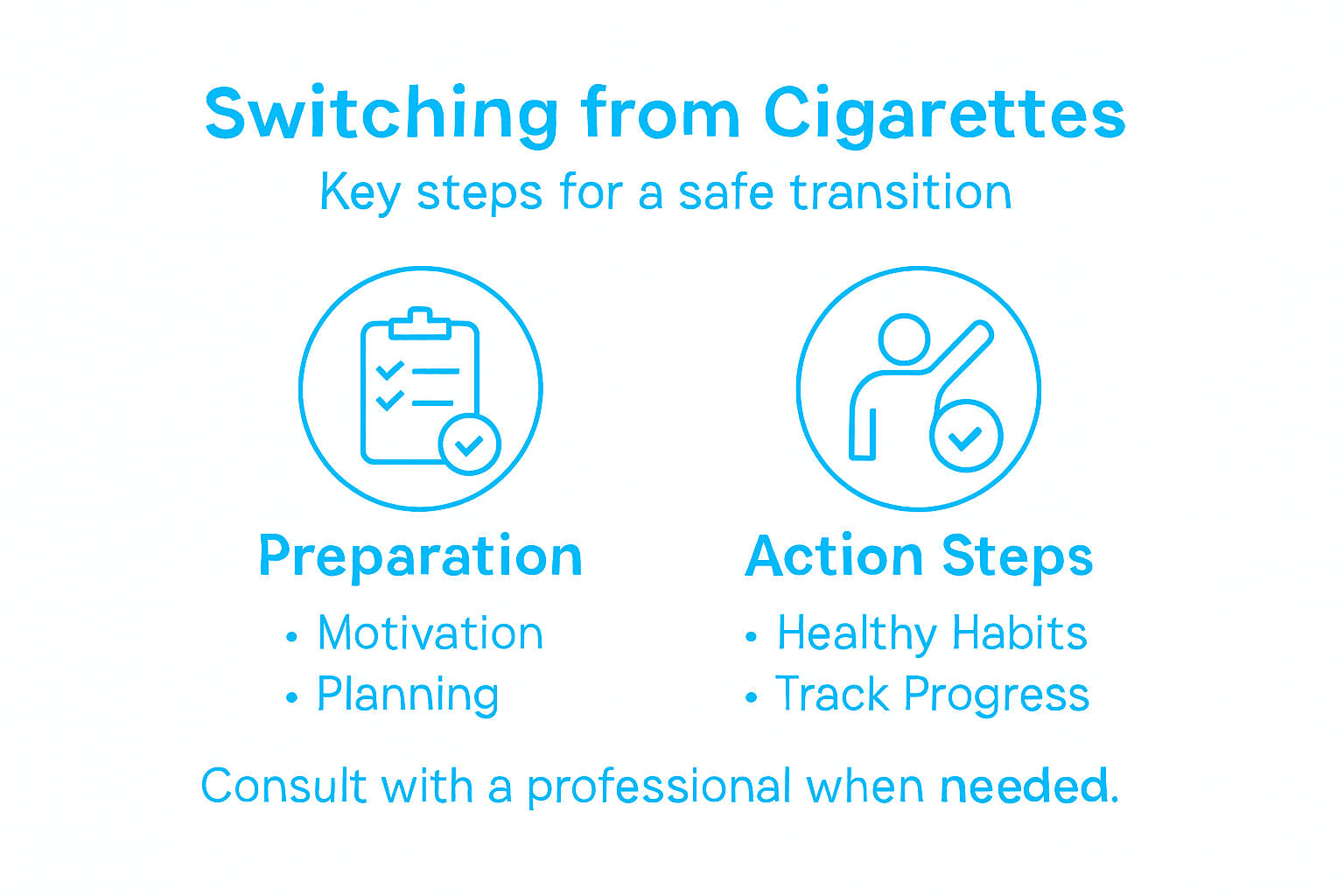
The CDC’s clinical intervention guidelines emphasize the importance of ongoing assessment and personalized strategy modification throughout your quit process.
Establish a comprehensive tracking system to evaluate your progress:
- Weekly self-check-ins
- Mood and trigger documentation
- Craving intensity tracking
- Milestone celebration
- Support network engagement
Implement a systematic progress review approach:
- Record daily smoking status
- Note emotional and physical changes
- Identify persistent challenges
- Adjust replacement strategies accordingly
Progress is not about perfection, but consistent movement toward your wellness goals.
Remember that setbacks are not failures but opportunities to learn and refine your approach. Each challenge provides valuable information about your unique quitting journey.
Review how progress tracking tools can enhance your quit journey:
| Tool Type | Key Benefit | Example Use Case |
|---|---|---|
| Digital journal | Visualizes progress trends | Track cravings and moods |
| Habit tracker | Rewards consistent actions | Mark smoke-free days |
| Mood log | Identifies emotional triggers | Spot links to relapses |
| Support group app | Connects to encouragement | Share milestones, seek advice |
Pro tip: Create a digital or physical journal to track your progress, allowing you to visualize your transformation and stay motivated through honest self-reflection.
Discover a Healthier Path to Quitting Cigarettes Today
Transitioning away from traditional cigarettes can be overwhelming, especially when managing triggers and finding satisfying nicotine-free alternatives. If you are committed to replacing tobacco routines with healthier rituals, Full Moons Club offers a premium selection of organic, hemp-based smokes designed specifically for your wellness journey. Our CBD and CBG-rich hemp cigarettes deliver a smooth, chemical-free experience that supports relaxation and stress relief without the harmful effects of nicotine or tobacco.

Explore how our carefully crafted herbal alternatives can become an integral part of your personalized quit plan. Visit Full Moons Club now to find your perfect smoke-free option and take control of your health with confidence. Make your quit date easier and more enjoyable by choosing natural hemp smokes that align with your goals. Start your journey to a cleaner lifestyle today by browsing our selection at Full Moons Club and discover the benefits of a tobacco-free, nicotine-free alternative.
Frequently Asked Questions
What should be my first step in switching from cigarettes safely?
Start by assessing your personal motivations for quitting smoking. Reflect on specific health benefits, financial savings, and quality of life improvements you aim to achieve, and write down your top motivations to keep them front of mind.
How can I create an effective transition plan for quitting cigarettes?
Develop a structured quit strategy that includes choosing a realistic quit date and identifying smoking triggers. Document your action steps such as removing smoking items from your environment and preparing alternative coping mechanisms to support your quit journey.
What are some healthy alternatives to smoking I can incorporate into my routine?
Replace smoking moments with healthier rituals such as morning meditation, herbal tea breaks, or short walks. Identify your common smoking triggers and brainstorm specific activities that align with your wellness goals to create meaningful replacements.
How do I monitor my progress after I quit smoking?
Establish a system for tracking your progress, including weekly self-check-ins and documenting moods and cravings. Regularly assess your challenges and adjust your strategies as needed to stay on track toward your smoke-free goals.
What should I look for in nicotine-free hemp alternatives?
Choose nicotine-free hemp alternatives that are sourced organically, undergo third-party lab testing, and have transparent ingredient lists. Evaluate products based on their wellness benefits, such as stress relief, to ensure they align with your goals of quitting smoking safely.
Recommended
- How to Transition to CBD Hemp Smoking Naturally – Full Moons Club
- 7 Compelling Reasons Why Switch from Tobacco – Full Moons Club
- Finding Healthier Alternatives: Quitting Smoking Without Missing the R – Full Moons Club
- Finding a Healthy Replacement: Quitting Cigarettes Without Losing the – Full Moons Club