

Quitting smoking often feels like an uphill battle, with cravings and stress threatening your best intentions. Many Americans searching for natural solutions wonder how they can ease withdrawal without relying on nicotine. Research from respected institutions such as the University of Minnesota and Washington State University shows that cannabidiol (CBD) helps ease somatic symptoms of nicotine withdrawal and reduces cravings by targeting the body’s addiction pathways. Discover how CBD is emerging as a promising option for those looking to support their wellness journey while breaking free from nicotine dependency.
Table of Contents
- CBD and Smoking Cessation Fundamentals
- How CBD Eases Withdrawal Symptoms
- CBD’s Role in Reducing Cravings
- Comparing CBD to Traditional Alternatives
- Risks and Legal Status in the U.S.
Key Takeaways
| Point | Details |
|---|---|
| CBD’s Role in Cessation | Cannabidiol (CBD) may support smoking cessation by reducing nicotine cravings and alleviating withdrawal symptoms through interactions with the endocannabinoid system. |
| Easing Withdrawal Symptoms | CBD can help manage anxiety, physical discomfort, and emotional instability associated with nicotine withdrawal, making the quitting process more manageable. |
| Comparative Advantages | Unlike traditional smoking cessation methods, CBD offers a non-addictive alternative with fewer side effects and potential for holistic support in overcoming addiction. |
| Legal Considerations | Consumers must understand the legal landscape of CBD, including THC content limits and variations in state regulations, before integrating it into their cessation strategy. |
CBD and Smoking Cessation Fundamentals
Quitting smoking involves complex neurological and psychological challenges, but emerging research suggests cannabidiol (CBD) could offer significant support during this difficult transition. Promising scientific investigations demonstrate that CBD might play a crucial role in addressing fundamental mechanisms underlying nicotine addiction and withdrawal symptoms.
The biological interactions of CBD with our endocannabinoid system provide fascinating insights into smoking cessation strategies. CBD appears to modulate neural pathways associated with addiction, potentially reducing nicotine cravings and managing withdrawal-related stress. Comprehensive medical research indicates that CBD could help regulate neurotransmitter systems disrupted by long-term nicotine use, offering a promising alternative to traditional cessation methods.
Key mechanisms through which CBD supports smoking cessation include:
- Reducing anxiety and stress triggered by nicotine withdrawal
- Potentially interrupting reward circuits associated with addictive behaviors
- Supporting neurological rebalancing during the quitting process
- Providing a non-intoxicating alternative to manage psychological dependencies
Pro tip: Consider consulting a healthcare professional about incorporating CBD into your personalized smoking cessation strategy, ensuring a safe and structured approach to quitting.
How CBD Eases Withdrawal Symptoms
Nicotine withdrawal can be an intense physiological and psychological challenge, with symptoms ranging from intense cravings to heightened anxiety. Targeted scientific research reveals that CBD offers a promising approach to mitigating these challenging withdrawal symptoms by directly addressing the body’s pain and stress responses associated with quitting smoking.
The mechanism of CBD in easing withdrawal involves complex interactions with the body’s endocannabinoid system. By modulating neural pathways, CBD can help reduce the somatic symptoms of nicotine withdrawal, such as physical discomfort and increased pain sensitivity. Comprehensive medical investigations demonstrate that CBD’s potential extends beyond physical symptom management, offering significant psychological support during the challenging smoking cessation process.
Specifically, CBD can help individuals manage withdrawal through several key interventions:
- Reducing anxiety and emotional instability
- Decreasing the intensity of nicotine cravings
- Supporting more stable mood regulation
- Minimizing physical discomfort associated with nicotine abstinence
- Potentially interrupting addictive behavior patterns
Pro tip: Start with low CBD dosages and gradually adjust, monitoring your body’s response and consulting healthcare professionals to develop a personalized smoking cessation strategy.
CBD’s Role in Reducing Cravings
Nicotine cravings represent one of the most challenging obstacles in smoking cessation, creating intense psychological and physiological urges that can derail even the most committed attempts to quit. Groundbreaking research reveals that CBD offers a sophisticated approach to interrupting these powerful craving cycles by directly targeting the enzyme systems responsible for nicotine metabolism.
The biochemical mechanism of CBD in reducing cravings is particularly fascinating. By inhibiting CYP2A6, an enzyme that metabolizes over 70% of nicotine in the human body, CBD effectively slows down nicotine processing. Comprehensive medical insights suggest this enzymatic intervention can significantly decrease the frequency and intensity of smoking urges, providing smokers with a critical tool in managing withdrawal symptoms.
Key strategies through which CBD helps reduce nicotine cravings include:
- Modulating neural pathways associated with addiction
- Providing a non-addictive alternative to cigarettes
- Reducing anxiety that typically triggers smoking impulses
- Supporting more stable neurochemical balance
- Minimizing the physiological reward mechanisms of nicotine
Pro tip: Combine CBD usage with mindfulness techniques and professional guidance to create a comprehensive approach to managing nicotine cravings and supporting your smoking cessation journey.
Comparing CBD to Traditional Alternatives
Smoking cessation has historically relied on a limited range of interventions, primarily focused on behavioral therapy and pharmaceutical treatments. Systematic reviews of cessation strategies reveal that traditional approaches like nicotine replacement therapy (NRT) and prescription medications have significant limitations in long-term success rates, creating an urgent need for innovative alternatives.

Traditional smoking cessation methods typically involve nicotine patches, gums, counseling, and prescription medications that often come with challenging side effects and limited effectiveness. In contrast, CBD offers a unique, non-addictive approach that addresses both the physiological and psychological aspects of nicotine dependency. CDC research on quit rates underscores the potential of complementary interventions like CBD in improving overall smoking cessation outcomes.
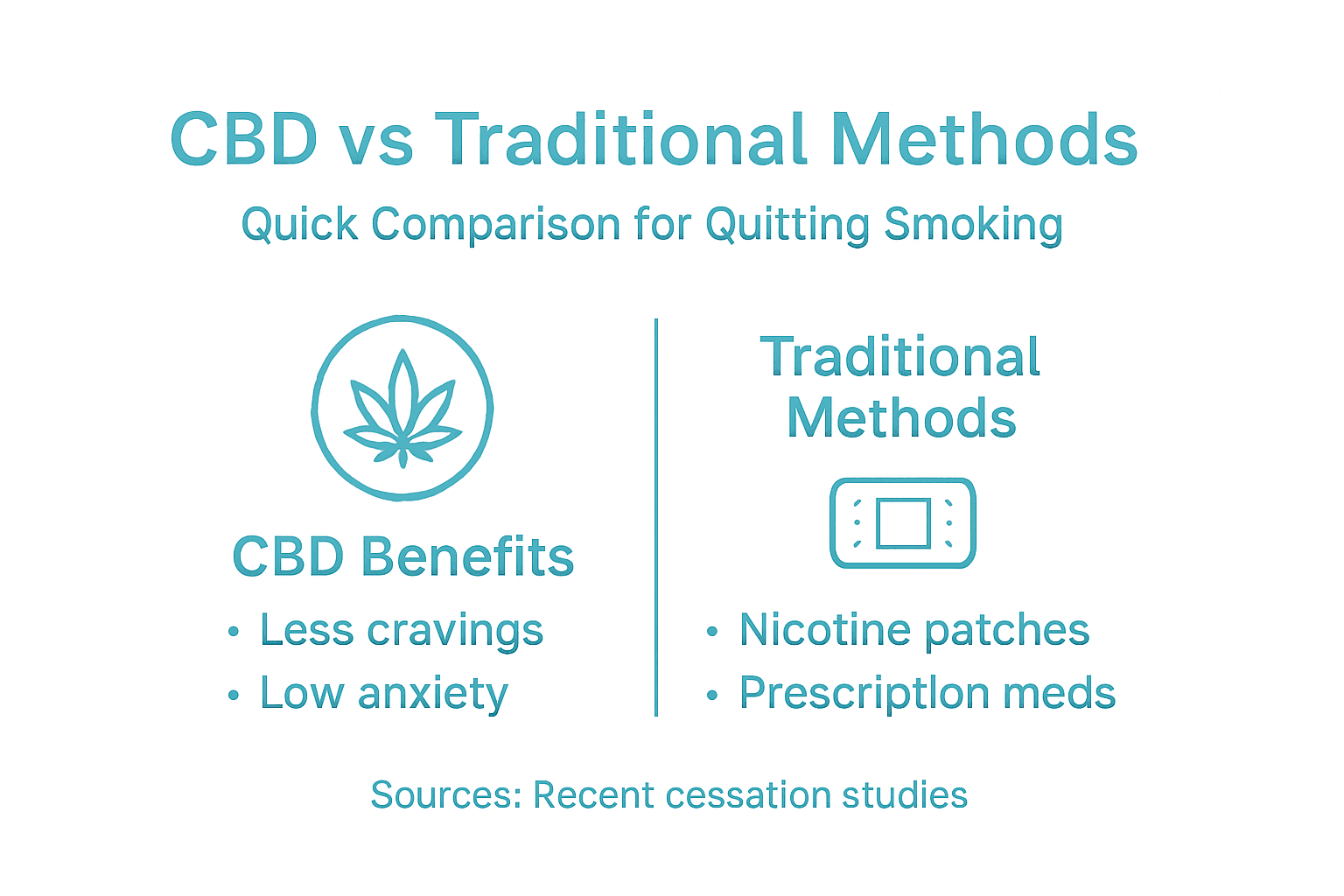
Key differences between CBD and traditional alternatives include:
Here is a concise comparison of CBD and traditional smoking cessation methods:
| Aspect | CBD Approach | Traditional Methods |
|---|---|---|
| Addiction Risk | No addictive properties | May contain nicotine, risk for dependence |
| Primary Mechanism | Supports endocannabinoid system | Targets nicotine receptors and behavioral cues |
| Common Side Effects | Mild, less frequent | Can include nausea, insomnia, irritability |
| Psychological Support | Reduces anxiety, aids mood | Varies by method, often limited to counseling |
- Non-addictive nature of CBD compared to nicotine replacement therapies
- Holistic approach to managing withdrawal symptoms
- Fewer documented side effects
- Natural mechanism of action through the endocannabinoid system
- Potential for reducing anxiety and stress associated with quitting
Pro tip: Consult healthcare professionals about integrating CBD as a complementary approach to your existing smoking cessation strategy, ensuring a personalized and comprehensive quit plan.
Risks and Legal Status in the U.S.
Navigating the legal landscape of CBD in the United States requires careful understanding of both federal and state regulations. FDA guidelines for cannabis research highlight the complex legal framework surrounding hemp-derived CBD, with specific provisions that consumers must carefully consider before using CBD for smoking cessation.
The legal status of CBD remains nuanced, with federal law permitting hemp-derived products containing less than 0.3% THC, while state regulations create a patchwork of different legal interpretations. State-level cannabis laws demonstrate significant variations in how CBD can be legally purchased, possessed, and used, making it essential for consumers to understand their local regulatory environment.
Key legal and safety considerations for CBD use include:
Below is a summary of key legal and safety considerations for CBD use in the U.S.:
| Consideration | Federal Level | State Level | Personal Action |
|---|---|---|---|
| THC Content Limit | Under 0.3% THC | Varies, stricter in some states | Read product labels, verify lab analysis |
| Product Regulation | Not FDA approved for smoking cessation | Some states require registration | Choose reputable brands, check local laws |
| Drug Interactions | Possible with some medications | State rules may affect prescription access | Consult healthcare provider before use |
- Federal requirement of less than 0.3% THC content
- Potential for inconsistent product quality
- Possible drug interactions with other medications
- Varying state-level restrictions and regulations
- Lack of FDA approval for specific medical treatments
Pro tip: Research your specific state’s CBD regulations and consult with a healthcare professional to understand potential interactions and legal limitations before incorporating CBD into your smoking cessation strategy.
Discover a Healthier Way to Quit Smoking with CBD Smokes
Quitting smoking is a challenging journey filled with intense nicotine cravings and withdrawal symptoms like anxiety and mood swings. This article reveals how CBD can help calm your mind, manage stress, and reduce those powerful urges by working with your body’s endocannabinoid system. If you are seeking an effective, natural alternative to traditional nicotine replacement therapies, Full Moons Club offers premium CBD smokes crafted from organic U.S.-grown hemp. Our products contain 0% THC and deliver a smooth, chemical-free experience that supports relaxation and eases the transition to a tobacco-free lifestyle.

Take control of your quitting process today with herbal cigarettes designed to ease withdrawal symptoms without the addictive risks or harsh side effects of conventional methods. Visit Full Moons Club to explore our range of hemp cigarettes and learn how a mindful, sustainable smoking alternative can support your wellness goals. Start your healthier tobacco-free experience now at Full Moons Club.
Frequently Asked Questions
What is CBD and how does it help with quitting smoking?
CBD, or cannabidiol, is a non-intoxicating compound derived from hemp that interacts with the body’s endocannabinoid system. It may help reduce cravings, manage withdrawal symptoms, and alleviate anxiety during the smoking cessation process.
How does CBD ease nicotine withdrawal symptoms?
CBD may help alleviate withdrawal symptoms by modulating neural pathways and addressing both the physical and psychological responses associated with quitting smoking. This can include reducing anxiety, stabilizing mood, and decreasing physical discomfort.
Can CBD help reduce nicotine cravings?
Yes, research indicates that CBD can impact the enzyme systems responsible for metabolizing nicotine, leading to decreased frequency and intensity of cravings. This makes it a potential tool for individuals trying to quit smoking.
How does CBD compare to traditional smoking cessation methods?
Unlike traditional methods, such as nicotine replacement therapy, CBD is non-addictive and targets both the physiological and psychological aspects of nicotine dependency. It tends to have fewer side effects and may provide a holistic approach to managing withdrawal symptoms.