

Finding the right CBD product can feel overwhelming when every label is packed with unfamiliar terms and tiny print. For many Americans trying CBD for the first time, these details matter because they reveal what is actually inside each bottle. Understanding label information, from CBD and THC content to third-party verification, helps you evaluate quality, safety, and compliance with United States regulations. This simple guide makes it easy to gather your products, check every label, and compare the key details needed for confident, informed choices.
Table of Contents
- Step 1: Prepare By Gathering Your CBD Products And Label Details
- Step 2: Identify Key Cannabinoid Content And Their Benefits
- Step 3: Analyze Ingredient Lists And Sourcing For Quality Assurance
- Step 4: Verify THC Levels And Legal Compliance For Safety
- Step 5: Confirm Certifications And Third-Party Lab Testing
Quick Summary
| Key Insight | Explanation |
|---|---|
| 1. Gather CBD products and labels | Collect all your CBD items and their labels to compare them effectively and gain clarity on their contents. |
| 2. Verify THC content for legality | Ensure all products contain less than 0.3% THC, as required by Federal law to avoid psychoactive effects. |
| 3. Document cannabinoid amounts | Record the amounts of CBD, CBG, and CBN for easier comparisons and to track which products meet your wellness goals. |
| 4. Examine ingredient lists closely | Review all ingredients, focusing on allergens and additives, to ensure the products align with your dietary needs. |
| 5. Check for third-party testing | Look for certificates of analysis to confirm the product’s potency and safety, ensuring quality and trust in your purchase. |
Step 1: Prepare by gathering your CBD products and label details
Before you can make informed decisions about your CBD purchases, you need to collect all the physical products and their labels in one place. This simple step eliminates confusion later and ensures you have everything visible when you start comparing what you find. Grab each product from your cabinet, shelf, or wherever you keep your wellness items, and set them up on a clean surface where you can examine them closely.
Start by reading what labels clearly state about hemp-derived CBD and verify the THC content information. According to Federal regulations under the 2018 Farm Bill, hemp-derived CBD products must contain less than 0.3% THC to be legal. This information should appear prominently on your label, so take note of whether it’s clearly visible or buried in small print.
Now look for the details that matter most. You’ll want to locate the CBD amount per serving and the total amount in the entire product, any third-party verification like certificates of analysis that prove what’s actually inside, the ingredient list to spot any allergens or carrier oils that might affect you, and the manufacturing or expiration dates to confirm freshness. If you see a QR code on the label, that often leads directly to testing results.
Don’t worry if the labels feel overwhelming right now. You’re simply gathering the information so you can evaluate it methodically in the next steps. Many labels pack a lot of information into small spaces, so having everything spread out in front of you makes the process much less confusing.
Write down or photograph each label detail as you go. This creates a reference document you can use to compare products side-by-side and helps you spot patterns in what you’re using. Your future self will appreciate having this information compiled in one place.
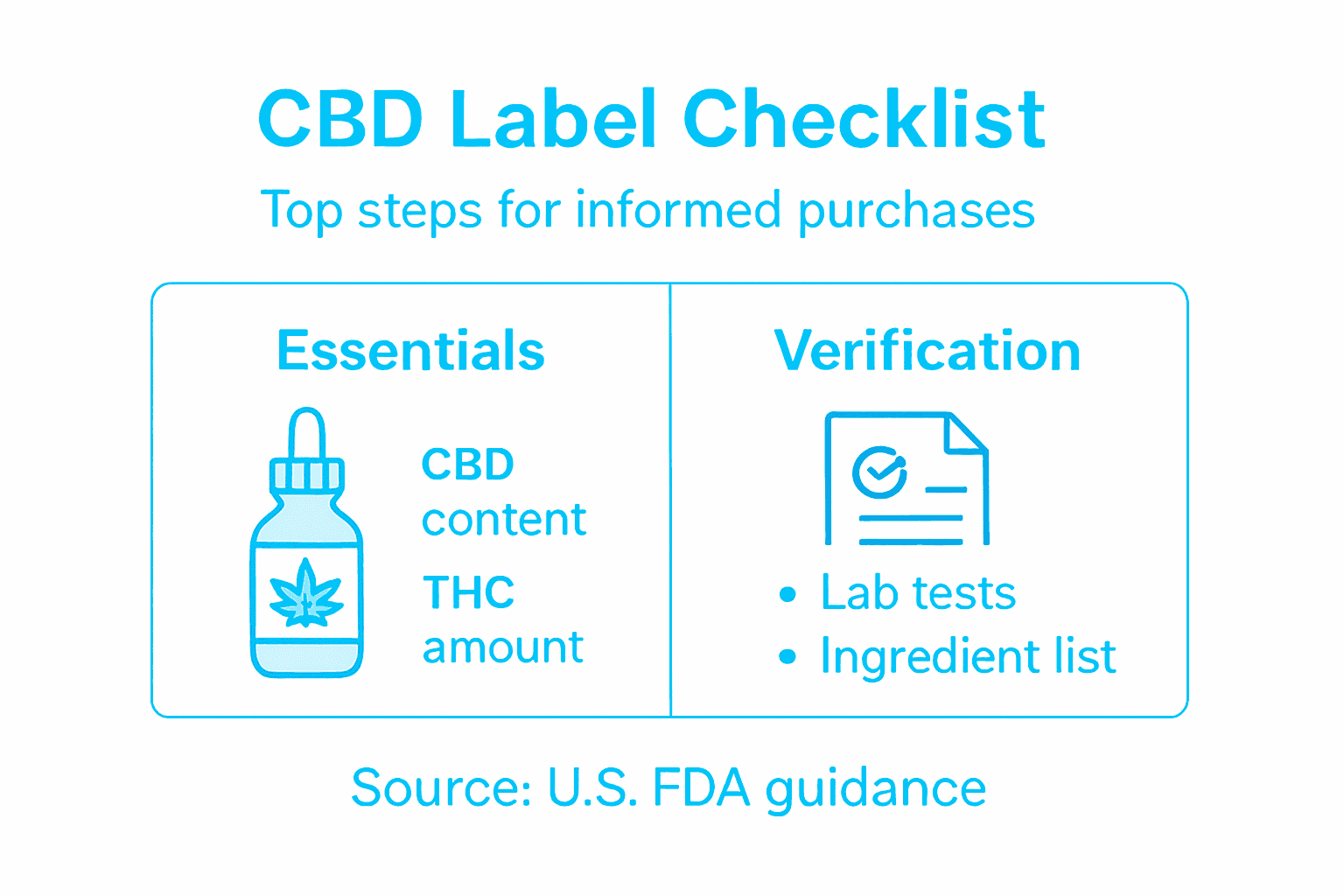
Here’s a quick summary of key CBD label information you should document for effective comparison:
| Detail to Record | Why It Matters | Where to Find on Label |
|---|---|---|
| CBD amount per serving | Determines individual dose effectiveness | Usually near supplement facts |
| Total CBD in product | Shows product’s true value and longevity | Front or back panel |
| THC content percentage | Ensures legal compliance and safety | Prominently or in fine print |
| Third-party test results | Confirms cannabinoid levels and purity | QR code or web link |
| Ingredient list | Identifies possible allergens or additives | Often on the back or side |
Pro tip: Use your smartphone camera to take clear photos of each label from multiple angles, especially the back where ingredient lists and third-party testing information typically appear, so you can review details later without fumbling with the original packaging.
Step 2: Identify key cannabinoid content and their benefits
Now that you have your products gathered, it’s time to understand what cannabinoids are actually inside them. Cannabinoids are the active compounds in hemp that create different effects and benefits for your wellness routine. Learning to spot these on your labels is the key to selecting products that match what you’re trying to achieve.
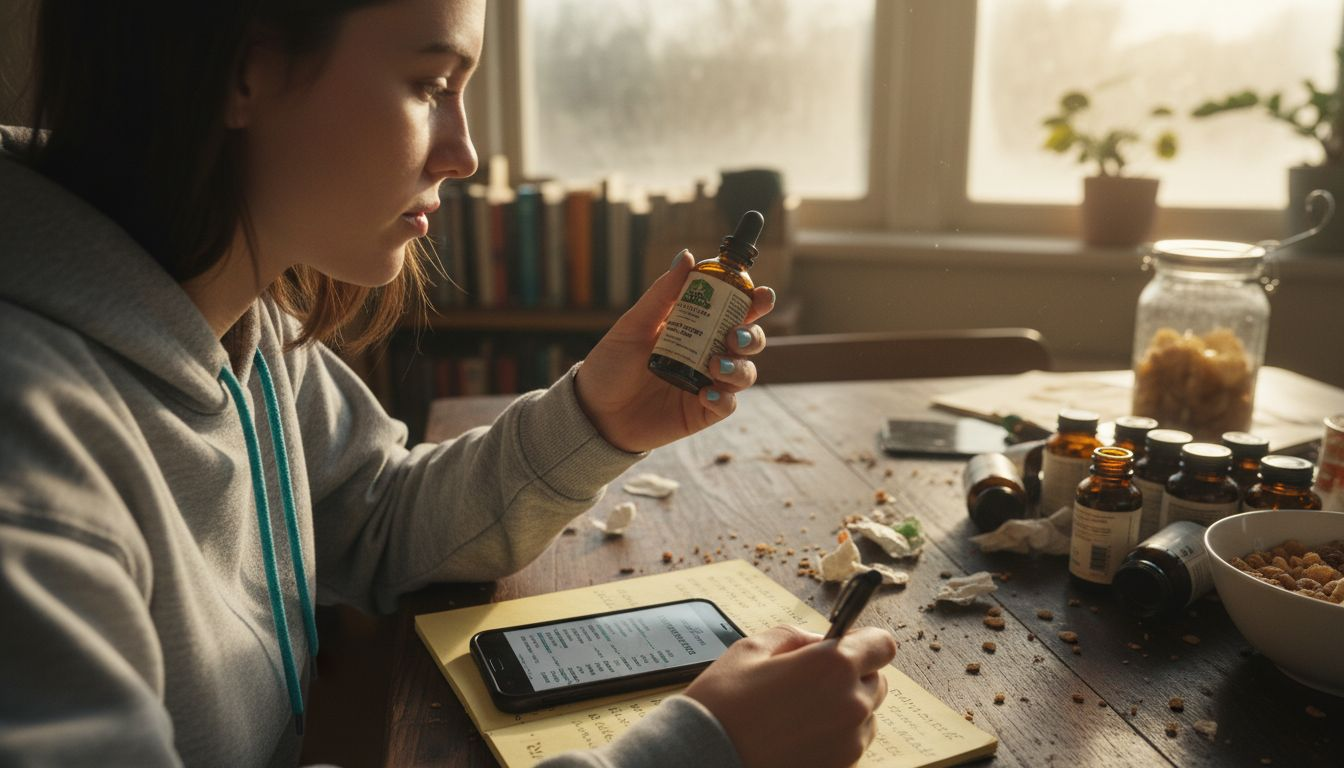
The first cannabinoid you’ll see is CBD, which is non-psychoactive and widely recognized for its potential therapeutic benefits. Look at your label for the CBD amount, usually listed in milligrams per serving or per container. CBD has been studied for helping with inflammation, anxiety, and certain seizure conditions, so if any of those are your wellness goals, check that your product clearly states the CBD content and concentration.
Beyond CBD, you should familiarize yourself with other cannabinoids that appear on quality labels. CBG and CBN offer distinct effects that differ from standard CBD, with some research suggesting CBN may promote better sleep and CBG could provide additional anti-inflammatory support. When you examine your labels, note whether they mention these companion cannabinoids, as full spectrum products often contain a blend rather than CBD alone.
Always check for THC percentages on your labels too. Since hemp-derived products must stay below 0.3% THC to be legal and non-intoxicating, verifying this number ensures you’re getting the right product for your needs. The cannabinoid profile tells you exactly what you’re getting, so don’t skip this detail.
Take a moment to write down the cannabinoid amounts from each product. This simple list helps you compare what different products offer and makes it easier to track which ones work best for your personal wellness goals. You’re building your own reference guide as you go.
The table below compares the main cannabinoids you may find in hemp-derived CBD products and their common benefits:
| Cannabinoid | Primary Effect | Typical Use Case |
|---|---|---|
| CBD | Non-intoxicating, calming | Stress, inflammation |
| CBG | May reduce inflammation | Support general wellness |
| CBN | Mild sedative, relaxing | Sleep improvement |
| THC | Psychoactive at high levels | Legal source must be below 0.3% |
Pro tip: Look for products that display their complete cannabinoid profile rather than just CBD content, since the interaction between multiple cannabinoids often creates better overall results than isolated compounds alone.
Step 3: Analyze ingredient lists and sourcing for quality assurance
With your cannabinoid information documented, it’s time to examine what else is in your products. The ingredient list tells you whether a product contains additives that could trigger allergies or affect how well it works for you. This is where many people miss critical details that impact their overall experience.
Start by reading every ingredient listed on the label, paying special attention to carrier oils like coconut oil, MCT oil, or hemp seed oil. These base ingredients can interact with your body differently, and some people have sensitivities to specific oils. Look for any flavorings, preservatives, or additives that might concern you, especially if you have known allergies or prefer minimal processing.
Next, investigate where the hemp actually comes from. Quality producers provide information about cultivation methods and hemp sourcing because the growing environment directly affects cannabinoid consistency and potency. If a label doesn’t mention the source or genetic strain, that’s a red flag worth noting in your comparison list.
Now look for third-party testing verification. Reliable manufacturers provide certificates of analysis that validate ingredient authenticity and confirm THC compliance. These certificates prove the product actually contains what the label claims and that no harmful contaminants are present. Many brands display QR codes linking directly to these test results, making verification quick and transparent.
Compare the ingredient lists across your products. You might notice that some use simpler formulations while others include numerous additives. Neither approach is automatically better, but understanding the differences helps you choose based on your personal preferences and wellness goals. Quality assurance starts with knowing exactly what you’re putting into your body.
Pro tip: Request certificates of analysis from manufacturers before purchasing if they’re not displayed on the label or accessible via QR code, as most reputable producers will gladly share this documentation to demonstrate product integrity.
Step 4: Verify THC levels and legal compliance for safety
This step is where safety and legality come together. Understanding THC content on your labels protects you from unintended effects and ensures your purchases are actually legal. Every product you buy should clearly display this information, and if it doesn’t, that’s a warning sign.
The key number to remember is 0.3%. Under Federal law established by the 2018 Farm Bill, hemp-derived CBD products must contain less than 0.3% THC to be legal nationwide. Products exceeding this threshold may cause psychoactive effects and violate state or local regulations. Check your labels carefully for the THC percentage listed per serving or per container.
Look at your label’s THC information and write it down alongside your cannabinoid notes. Compare this across all your products to see which ones stay well below the legal limit. Some products proudly advertise “0% THC” or “THC-free,” while others list specific percentages. Both approaches are fine as long as they stay under that crucial 0.3% threshold.
Don’t just trust the label alone. Certificates of analysis provide independent verification that a product actually meets what it claims. These lab test results confirm THC content has been measured by a third party, removing any guesswork from your assessment. If you cannot find testing documentation, contact the manufacturer and request it before making a purchase.
State regulations can vary, so understand your local laws too. While Federal law permits up to 0.3% THC, some states maintain stricter rules. Knowing your location’s regulations helps you stay compliant and avoid products that might be problematic in your area.
Pro tip: Screenshot or photograph the THC content and lab test results for each product and save them to your phone, creating a searchable reference library you can access anytime without juggling multiple labels.
Step 5: Confirm certifications and third-party lab testing
You’re nearing the finish line. This step separates trustworthy products from those cutting corners on quality control. Third-party lab testing is your proof that what’s on the label actually matches what’s inside the bottle.
Look for a certificate of analysis on your product packaging or website. This document shows independent lab results verifying cannabinoid content, potency, and the absence of harmful contaminants. Many brands include a QR code that links directly to these results, making verification instant and transparent. If you don’t see this information readily available, that’s a significant red flag.
When you access the lab results, examine what the testing actually covered. Third-party lab testing confirms cannabinoid profiles and validates that product contents match label claims. The report should clearly list CBD concentration, THC levels, and typically screen for pesticides, heavy metals, and mold. Reputable labs test for a comprehensive range of potential contaminants, not just basic cannabinoid content.
Check the lab’s credentials too. Look for certifications from recognized testing organizations and verify that the facility conducts independent testing. A legitimate lab won’t be owned by the product manufacturer, ensuring unbiased results. If a company claims third-party testing but the lab is affiliated with them, that’s not truly independent verification.
Compare lab results across your products. Some may have passed rigorous testing while others show minimal screening. Products with comprehensive testing reports demonstrate a manufacturer’s confidence in their quality. Make notes about which products have the most thorough documentation and which ones leave gaps.
Pro tip: Contact the manufacturer directly if lab results aren’t easily accessible through QR codes or links, and ask them to email you the most recent certificate of analysis before you make a purchase decision.
Take Control of Your Hemp Experience with Confidence
Reading CBD labels carefully is essential to avoid confusion and ensure you get products that truly match your wellness goals. Understanding cannabinoid content and verifying third-party testing gives you peace of mind and safety. If you are seeking a smooth, chemical-free hemp option with trustworthy labeling and zero THC for legal compliance explore our premium collection of CBD Cigarettes, Lighters & Totes for Sale - Full Moons Club. Our products simplify the process so you can enjoy the benefits of hemp without the guesswork.
Elevate your hemp experience today with a tobacco-free alternative crafted from organic U.S.-grown hemp rich in CBD, CBG, and CBC. Visit Full Moons Club to find natural, sustainable herbal smokes designed for relaxation, stress relief, and mindful moments. Start your journey to informed hemp choices and healthier rituals now with home page – Full Moons Club.
Frequently Asked Questions
How can I find the CBD amount per serving on a label?
To find the CBD amount per serving, look for the “supplement facts” section on the product label. This information is typically displayed in milligrams (mg) and indicates how much CBD you get with each dose.
What should I check for to ensure the product is legal and safe?
Check the THC content percentage on the label, which should be below 0.3% to comply with federal regulations. Write this value down to ensure the product fits within legal safety guidelines.
How do I verify third-party testing information for CBD products?
Look for a QR code or a link to a certificate of analysis on the product packaging. This document will provide independent lab results verifying cannabinoid levels and the absence of harmful contaminants.
What ingredients should I pay attention to on CBD labels?
Examine the ingredient list for potential allergens, carrier oils, and any additives that might affect your experience. For instance, if you are sensitive to coconut oil, make sure it isn’t included in the formulation.
Why is it important to compare cannabinoid profiles across products?
Comparing cannabinoid profiles helps you understand the unique effects different products may have on your wellness goals. Create a quick list of cannabinoid amounts from each product to see which aligns best with your needs.
How can I confirm the source of hemp for quality assurance?
Look for information about the hemp’s origin on the product label; quality manufacturers often disclose their cultivation methods. If this information isn’t present, consider it a red flag and proceed with caution.